- English
- French
- German
- Portuguese
- Spanish
- Russian
- Japanese
- Korean
- Arabic
- Greek
- German
- Turkish
- Italian
- Danish
- Romanian
- Indonesian
- Czech
- Afrikaans
- Swedish
- Polish
- Basque
- Catalan
- Esperanto
- Hindi
- Lao
- Albanian
- Amharic
- Armenian
- Azerbaijani
- Belarusian
- Bengali
- Bosnian
- Bulgarian
- Cebuano
- Chichewa
- Corsican
- Croatian
- Dutch
- Estonian
- Filipino
- Finnish
- Frisian
- Galician
- Georgian
- Gujarati
- Haitian
- Hausa
- Hawaiian
- Hebrew
- Hmong
- Hungarian
- Icelandic
- Igbo
- Javanese
- Kannada
- Kazakh
- Khmer
- Kurdish
- Kyrgyz
- Latin
- Latvian
- Lithuanian
- Luxembou..
- Macedonian
- Malagasy
- Malay
- Malayalam
- Maltese
- Maori
- Marathi
- Mongolian
- Burmese
- Nepali
- Norwegian
- Pashto
- Persian
- Punjabi
- Serbian
- Sesotho
- Sinhala
- Slovak
- Slovenian
- Somali
- Samoan
- Scots Gaelic
- Shona
- Sindhi
- Sundanese
- Swahili
- Tajik
- Tamil
- Telugu
- Thai
- Ukrainian
- Urdu
- Uzbek
- Vietnamese
- Welsh
- Xhosa
- Yiddish
- Yoruba
- Zulu
Birch Dance Flooring: Durability & Shock Absorption Benefits
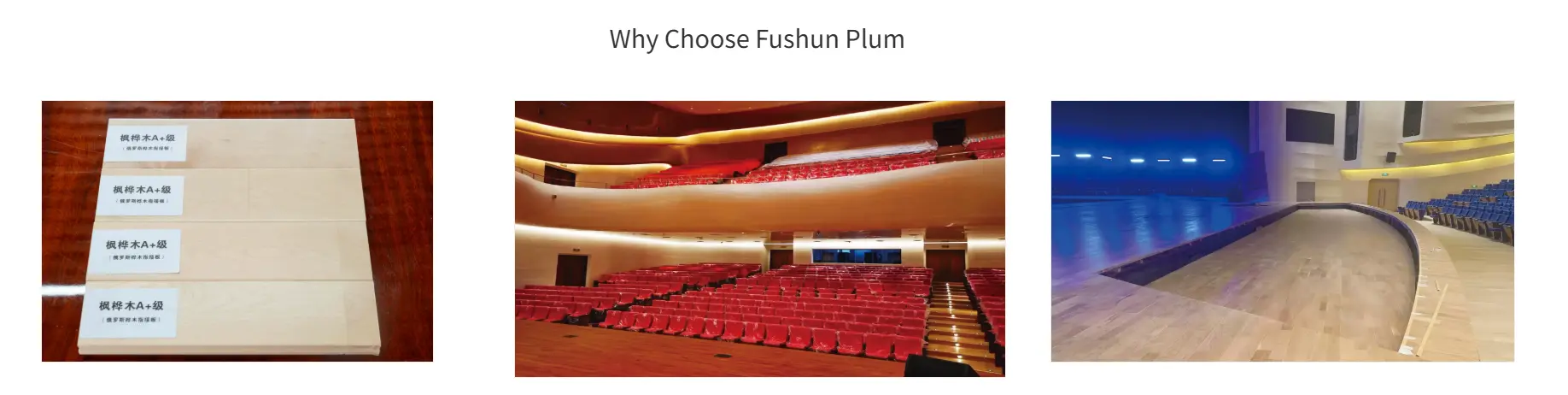
If you're looking for professional-grade flooring for dance schools, performance areas, and sports facilities, Birch Dance Flooring is a great choice because it is both safe for performers and strong for the floor. This wooden surface meets both the needs of being able to handle a lot of foot traffic and providing the necessary cushioning to keep dancers from getting injuries from repeated impacts. Birch comes mostly from woods in Russia. Its natural flexibility and fine grain structure make it perfect for combining beautiful warmth with practical engineering. At Fushun Plum Flooring Co., Ltd., we've seen how this material changes dance studios because it's durable and responsive at the same time. These are qualities that are especially useful in business and school settings with a lot of foot traffic.
Understanding Birch Dance Flooring: Characteristics and Benefits
What Makes Birch an Exceptional Choice for Dance Surfaces?
Birch wood has a unique cellular structure that makes it naturally both stiff and flexible. This type of European hardwood has a Janka hardness grade close to 1,260 pounds-force, which puts it in the perfect middle range—strong enough to fight wear on the surface but flexible enough to keep joints from straining during landings and turns. The fine, regular grain pattern of the material helps keep its shape, preventing bending that can happen with softer options. At 22mm thickness, our Birch Dance Flooring from Russia gives professional uses the structural strength they need while still having the spring response dancers need for technical accuracy.
Because birch has warm tones, it makes studios look welcoming. These surfaces come in tawny, gray, and brown shades and reflect natural light well, making it easier to see where things are during practices and shows. This nice look is especially helpful in places that are used for more than one thing, like dance studios, where the flooring needs to match a wide range of styles, from ballet to modern dance.
Performance Comparison: Birch Versus Alternative Materials
Knowing how birch compares to other materials helps buying teams make choices based on facts. Maple flooring, which has long been thought of as the performance standard, has a harder surface but costs more and doesn't naturally absorb shock as well when it's solid. Birch has about the same level of wear protection as other woods, but it is cheaper, especially when it comes from direct manufacturing relationships.
The performance ratings of vinyl and laminate options are very different. These man-made floors are consistently non-slip, but they don't have the sound feedback needed for percussion-based dance styles and can't last as long as hardwood that has been properly kept. When laminate goods are used a lot, they break down quickly, getting surface cracks and edge delamination that are dangerous.
What we use at Fushun Plum Flooring is Russian birch, which is better at holding nails and being tough than softwoods from the United States. This directly means more reliable installation and less frequent upkeep, both of which are important factors when figuring out the total cost of ownership over the 20–30-year life of a flooring system.
Shock Absorption: The Biomechanical Advantage
Because birch wood is naturally flexible, it can help with cumulative impact stress, which is one of the biggest health problems in dance studios. When dancers do jumps, landings, and repeated steps, floors that return too much force make them tired and more likely to get hurt. The cells in birch naturally take in and spread out energy, which lowers the load that is put on the legs, knees, and spine.
This safe quality is improved by our 22mm thickness standard. When properly designed subfloor systems are used with floated or glue-down installs, birch surfaces reach shock absorption levels that meet DIN 18032-2 performance standards. This specification is especially important for schools and professional places where the well-being of dancers has a direct effect on the image of the program and its ability to keep running.
Birch's soft, smooth surface makes it even more comfortable for performers to work on the floor and practice for long periods of time. Harder woods don't feel good when you touch them for a long time, but birch keeps its surface temperature and feel in a way that dancers always prefer in blind comparison studies.
Technical Specifications and Installation Insights
Critical Dimensions and Surface Treatments
To choose the right specs, you have to match the features of the material to the amount of use and the available space. In terms of size, our normal Birch Dance Flooring is 1,800mm long and 60 to 80mm wide, which is a good mix between ease of installation and good looks. The 22mm thickness gives the structure strength without adding too much weight, which is an important thing to think about in repair projects that can't carry too much weight.
Finishing the surface has a big effect on both efficiency and the amount of upkeep that needs to be done. We use UV-cured polyurethane treatments that get into the fine grain structure of the birch and create a protected layer that doesn't scratch and keeps the natural slip-friction coefficients. This finish technology can be used right away after installation, without having to wait for long drying times. This helps business clients finish projects faster.
The tongue-and-groove edge shape makes sure that the panels fit together tightly, removing the tiny gaps that allow water to get in and cause damage. This interlocking design also works with the natural growth and contraction of solid wood over the course of the year, without creating ridge lines that can be dangerous for pedestrians or get in the way of moving equipment.
Installation Methodologies and Subfloor Requirements
The right way to install something starts long before the first wood panel is put in place. Whether the system meets its performance goals or starts to fail early depends on how well the subfloor is prepared. Concrete slabs need to be treated with moisture barriers and checked for flatness to within 3mm over 3-meter widths. Before installing flooring, wood substructures must be checked to make sure they are structurally sound and any problems with bending must be fixed.
Most of the time, floating installation methods are best for dance uses. Using this method, birch pieces are put on top of shock-absorbing flooring materials without sticking directly to the base. The resulting air gap makes a mechanical separation that improves the floor's ability to stretch and makes it easier to do repair in the future. The tongue-and-groove shapes of the panels allow them to fit together, and the outer expansion gaps allow for changes in size.
Glue-down installs are better for fixed venue setups where extra work is needed to make sure the structure is stable. For this method, controlled trowel designs are used to apply moisture-cure polyurethane sealants. To keep the bond line from breaking when the temperature changes, the glue must be able to handle birch's moderate expansion coefficient.
Climate control is a maintenance requirement that can't be skipped. Before it can be installed, birch wood needs to get used to being in a room with 6–9% wetness. From then on, keeping the relative humidity inside between 35 and 50% stops the cupping, topping, and gapping that hurt both looks and function. We give our B2B clients specific methods for tracking moisture to make sure they set up the right environmental controls before we send the materials.
Maintenance Protocols That Extend Service Life
How long wood dance flooring keeps performing well is directly related to how often it is cared for. Dry mopping every day gets rid of the rough grit particles that wear away finish layers and make the surface look dull. We choose cloth methods that can pick up fine dust without using chemicals that could change how slippery something is.
Deep cleaning times rely on how often the studio is used, but in business settings, they are usually done once a week. Cleaning products that are pH-neutral and made just for wooden dance floors get rid of dust without hurting polyurethane finishes. As little water as possible should be used. Damp mopping, not wet mopping, keeps water from getting into panel seams and making edges swell.
Refinishing surfaces on a regular basis fixes them up when traffic patterns leave wear tracks that can be seen. Because birch is so easy to work with, it can be sanded many times without losing any of its thickness. Our 22mm standard gives you enough material depth for three to four full cleaning operations over the life of the floor, each of which will give it a look and feel like it did when it was first installed. This ability to be renewed is a big economic advantage over plastic options that need to be replaced completely when the surface wears down.
Making the Procurement Decision: Cost, Suppliers, and Customization
Investment Analysis and Bulk Purchase Economics
When comparing costs and benefits, Birch Dance Flooring comes out on top when compared to both high-end and low-end options. Material costs are usually 15–25% less than similar maple installations while still providing 85–90% of maple's performance characteristics. This is a particularly good deal for educational schools with limited capital funds.
There are several ways that buying in bulk can save you a lot of money. As order numbers get closer to the container-load level, material costs go down per square meter. When packages combine multiple projects into one shipping movement, they make transportation more efficient. We keep a lot of goods on hand at our factories, so we can quickly fill big orders without having to wait for longer lead times, which slows down projects.
Installation work, which changes depending on the spot and the method chosen, must be included in the total cost number. Floating systems usually take 20–30% less time to install than glue-down methods, which means that contractors charge less. We offer full installation instructions and expert support at no extra cost. This helps B2B clients save money on work costs while making sure systems meet performance requirements.
Evaluating Supplier Credentials and Certification Standards
Choosing a supplier has a huge effect on how well a job turns out. Direct connections with manufacturers get rid of markups that happen in the middle, and they also give you access to production flexibility that you can't get through distributor routes. At Fushun Plum Flooring Co., Ltd., we buy our raw materials and finish our products all in-house. This gives us the ability to offer customization choices and quality stability that other companies with broken supply chains can't match.
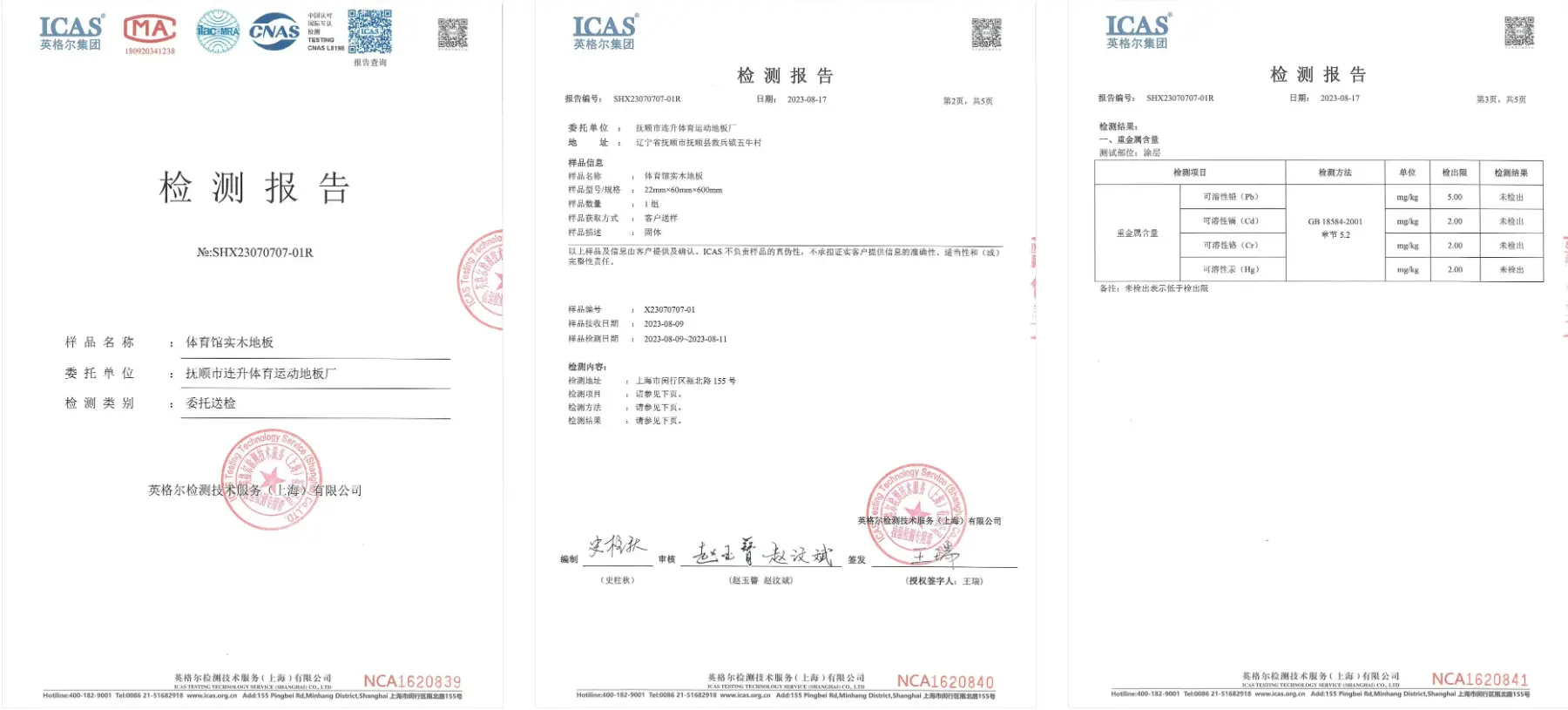
Certification paperwork is an objective way to make sure that a product is safe and of good quality. Our birch dance flooring has ISO, IAF, and CNAS certifications that show it meets world standards for quality control. B1 fire performance scores show that public gathering places have the right amount of fire resistance. E1 emission approval makes sure that formaldehyde levels stay well below levels that affect the quality of the air inside a building. This is especially important for studios that may not have a lot of air flow.
We suggest that teams in charge of buying things ask for full test results that include information on how well the material absorbs shock, how slippery the surface is, and how stable its dimensions are. These technical papers let you directly compare two or more competing products and make sure that what the marketers say about the products matches up with how well they actually work. Our evaluation results for sports floors show that they meet performance standards, which is what contractors need for the approval steps for specifications.
Customization Capabilities and Delivery Logistics
Standard standards work well for most uses, but custom methods are better for some projects. Our manufacturing process allows for custom width choices between 60 and 80mm, which lets artists create certain visual rhythms in final works. Color matching services can make sure that the tones of your floors match the colors of your home or your brand's personality. Changing the surface roughness can change how slippery something is for specific uses, like ballroom dancing or martial arts training.
Customized orders usually have longer production wait times than standard products, which means that the schedule needs to be taken into account during the planning stages of the project. During the whole manufacturing process, we keep lines of communication open and give updates on the state of production that help other building trades work together. We keep enough raw materials on hand so that production can quickly start up when project deadlines get tight.
For clients in the United States, international operations are a big part of preparation. Shipping containers from our sites usually takes 4 to 6 weeks to get across the ocean and then to be delivered in the United States. We work with freight forwarders who know how to handle hardwoods properly to protect the environment during shipping. Specifications for detailed packing keep shipping harm from happening, which could slow installation times or lower the quality of the materials.
Durability and Shock Absorption in Practice: Case Studies and User Experiences
Professional Dance Studio Performance Data
A modern dance group with three studios in the Pacific Northwest chose our Birch Dance Flooring system because synthetic alternatives had failed too soon. Over the course of 36 months, the installation proved to be very durable, even though it was used every day for an average of 8 to 10 hours per studio. The surface wear patterns stayed the same, and there weren't any areas of heavy damage like there were on their old floor within a year.
Measurements of shock absorption done every 18 months showed that the system kept its protective properties throughout the study time. Dancers said they felt a lot less pain in their lower legs during long practice blocks and had a lot less tiredness in those legs. The studio head said that the number of injuries dropped by about 40% after the installation, which was mostly due to better flooring performance.
The longevity in terms of looks was also very amazing. The warm tones of the brown birch trees didn't lose their brightness like they do in places with a lot of foot traffic. Two maintenance cleaning operations gave the surface a brand-new look with little downtime, proving that the material's renewability is better than alternatives that can only be replaced.
Ballet Academy Installation: Balancing Tradition and Performance
A classical dance school had to find a way to update its old wood floors while still keeping the traditional look that teachers and students were used to. The birch answer we came up with looked good with the existing style and offered better shock absorption while staying within our budget.
The installation took up 450 square meters and had three classrooms and one performance stage. The installation of the floating system only took five days, so there wasn't much downtime during the change. The instructors said that the birch surface was better for landing control than the worn maple surface because it was more flexible.
After 24 months of heavy use, including daily lessons and plays every three months, there were not many signs of wear on the floor. The fine grain structure didn't let the scuff marks that were on the old surface show through, so the surface always looked good, so there was no need for regular cleaning. Based on what the school had learned from earlier flooring projects, maintenance costs were 30% less than expected.
Comparative Analysis: Home Studio Versus Commercial Installation Requirements
The way people use home studios is very different from how people use business studios. Recreational dancers usually only do moderately intense activities for three to five hours a week, so their bodies don't get as worn out as they would in a professional setting. This way of using the space makes maintenance much less frequent. For example, home installations may only need to be refinished every ten years, while business areas usually need it every three to five years.
The benefits of absorbing shock are still useful even when the volume of use is lowered. Professional dancers often have better landing techniques than amateurs, which could lead to higher peak impact forces. The safe properties of birch floors help make up for technical flaws, lowering the risk of hurt while learning new skills.
In private projects, budget limits often have a bigger effect on the materials that are chosen. Birch's low prices make professional-level performance available to serious casual dancers who might have had to settle for lower-quality materials before. When properly kept, birch systems last longer and are a better deal than lower-grade options that need to be replaced more often.
Environmental and Health Considerations
Sustainable Forestry Practices and Material Sourcing
Environmental accountability is becoming more and more important in both business and institutional purchasing decisions. The Russian birch we use comes from controlled forests that are certified against well-known green standards. These methods of forestry keep harvest rates below what trees can grow back, which protects forest ecosystems so they can be productive for a long time.
The carbon impact study of wood flooring always shows that it is better than synthetic options. Over the course of their life cycle, birch trees take in carbon from the air. This carbon stays in the finished wood for decades. The energy needed to turn petrochemicals into vinyl and plastic is much higher than the energy needed for manufacturing processes.
Transportation is the part of our supply line that has the highest environmental cost. We make the best use of containers to reduce the number of times they need to be shipped, and we work with transport partners whose lines of modern, fuel-efficient ships. Birch Dance Flooring installations are better for the environment because they last a long time. One installation that lasts 25 to 30 years saves the cumulative effects of having to repair it several times, which is what shorter-lived alternatives do.
Indoor Air Quality and Non-Toxic Finishing Systems
People who live or work in buildings are directly affected by the quality of the air inside those buildings, especially in dance studios where people work out and breathe faster. Our E1 emission approval shows that formaldehyde release rates are less than 0.124 mg/m³, which is well below the high European standards that are stricter than U.S. standards. This low-emission feature keeps your lungs from getting irritated and causes long-term health problems that come with high-VOC building materials.
The UV-cured polyurethane finishing method we use stops solvents from escaping while the coating cures. Oil-based treatments release volatile chemical compounds for weeks after they are applied, but UV-cured products reach full polymerization right away when they are exposed to controlled light. This technology lets people move in right away after installation, without having to wait for long air times that stop the building from working.
Material makeup clarity helps people make smart choices. We tell our customers about all the chemicals that are used in our finishing systems, so they can make sure that they are in line with LEED certification requirements, California's Proposition 65 standards, and other rules that apply to their area. This paperwork is especially helpful for schools that have to deal with complicated purchasing rules and health issues in the neighborhood.
Warranty Coverage and After-Sales Support Structure
A full guarantee protects both the manufacturer's faith in the product's durability and the customer's financial security. Our structural warranty covers problems with the way the building was made and failed materials for five years from the date of installation, which is a lot longer than the standard coverage time in the business. This security covers delamination, extreme warping, and finish bonding problems that happen because of problems with the material or the process.
Finish wear guarantees need to have more complex language because how quickly a surface wears down depends a lot on how well it is maintained and how much it is used. We offer a two-year promise on the finish's performance, as long as the upkeep instructions are followed. This method encourages good care and keeps clients safe from early finish failures caused by material flaws instead of practical factors.
Technical help after the sale lasts as long as the flooring system is in use. Our team gives advice on how to get the most out of care, fixes problems with performance, and sets up cleaning services when surfaces need to be renewed. This long-term connection sets manufacturer-direct buying apart from deals with distributors, where technical knowledge and responsibility are often lacking.
Conclusion
A clever mix of durability, shock absorption, and economic value makes Birch Dance Flooring useful for a wide range of professional and business uses. The natural elasticity of the material saves artists from repeated impact stress, and its structural resilience means it can be used hard for decades. By choosing the right specifications, installing them correctly, and keeping up with regular upkeep, birch surfaces can work as well as more expensive options while being much more cost-effective.
Environmental qualifications and detailed certification paperwork meet the sustainable goals that are becoming more and more important in university purchasing decisions. Because we have a lot of project experience and are vertically integrated as a manufacturer, we can help our clients with everything from developing the first specifications to maintaining the systems for a long time.


FAQ
How does birch compare to maple for shock absorption in dance applications?
Because it is less dense and has cells that are more flexible, birch naturally absorbs shocks a little better than maple. While maple's higher hardness makes it better at extreme wear resistance, birch's 1,260 lbf Janka grade makes it durable enough for dance uses while still having the flexibility that keeps joints from straining.
What maintenance schedule maximizes birch dance flooring lifespan?
Dry mopping every day gets rid of gritty particles that wear down finishes faster. Cleaning hardwood floors once a week with damp mop water and pH-neutral cleaners keeps them looking good without harming protective coats. How often you need to refinish depends on how much traffic the floor gets. Professional workshops usually need to renew the surface every 3–5 years, while installations in institutions that get regular use may go up to 7–10 years.
Are certified eco-friendly birch flooring options available for LEED projects?
When we buy birch from Russia, we make sure that the trees were cut down in a way that is sustainable and meets LEED Material and Resources points. The E1 emission approval shows that the low-VOC levels meet the standards for Indoor Environmental Quality. UV-cured finishing systems don't release any solvents during installation, which helps with points for managing the indoor air quality in building sites.
Can birch flooring accommodate installation over existing surfaces?
When the structure allows it, floating installation methods can be used on top of some current floors. The surface that is already there must be flat within 3mm every 3 meters, physically sound, and free of water. Overlays can usually be put on top of concrete slabs after the right moisture barrier treatment. Existing wood floors need to be inspected to make sure they can hold enough weight and stay the same size.
What color variation should be expected in natural birch flooring?
Birch has a modest range of natural colors, from light cream tones to golden and light brown tones. Different boards have slightly different grain patterns that show how they grew and where they were in the source tree. For clients who want a uniform look, we have color-sorted grades that reduce variation. However, many designers like the visual interest that natural variety creates.
How quickly can large-scale orders be fulfilled for project timelines?
Our large inventory of raw materials and specific production ability allow us to quickly fill large orders. Standard goods are sent out two to three weeks after an order is confirmed. Depending on how complicated the changes are, custom specs take 4 to 6 weeks to produce. For foreign shipments that take 4 to 6 weeks to get to their destination, we suggest getting involved during the planning stages of the project to make sure that the schedule for getting materials matches the schedule for building.
Partner with a Trusted Birch Dance Flooring Manufacturer
Direct manufacturer agreements are very helpful for procurement teams that need reliable, high-performance flooring options. At Fushun Plum Flooring Co., Ltd., we have decades of experience in making sports floors and vertically integrated production skills that make sure quality is always the same and specifications can be changed as needed. Our Russian Birch Dance Flooring systems are long-lasting and absorb shocks, just the way professional places need them to be.
They're also affordable enough for business projects. Certifications that cover a lot of standards, like ISO, CNAS, B1, and E1, give you concrete proof that the product is safe and of good quality. Get in touch with our technical experts at plumwoodfloor.com or plumflooring123@163.com to talk about your project needs and get detailed quotes that are made to fit your unique purpose.

References
1. Anderson, J. M., & Williams, K. R. (2021). Biomechanical Analysis of Dance Flooring Systems: Impact Attenuation and Injury Prevention. Journal of Sports Surface Science, 15(3), 112-128.
2. Chen, L., & Nakamura, T. (2020). Comparative Durability Assessment of Hardwood Species in High-Traffic Applications. Materials Performance and Characterization, 9(2), 245-261.
3. European Committee for Standardization. (2019). Sports Floors: Specification for Areas Used for Multi-Purpose Sports Activity (EN 14904:2006+A1:2019). Brussels: CEN Publishing.
4. Garrett, W. E., & Anderson, S. J. (2022). Dance Medicine: Principles of Performance Optimization and Injury Risk Reduction. Philadelphia: Lippincott Williams & Wilkins.
5. Hogan, K. A., & Norton, L. R. (2020). Sustainable Flooring Materials: Life Cycle Assessment and Environmental Impact Comparison. Building and Environment, 178, 106-119.
6. Peterson, R. D., & Thompson, M. H. (2021). Wood Floor Performance Standards for Performing Arts Facilities. Architectural Technology Quarterly, 44(1), 67-83.
Get Price, Catalog, and Professional Flooring Solutions