- English
- French
- German
- Portuguese
- Spanish
- Russian
- Japanese
- Korean
- Arabic
- Greek
- German
- Turkish
- Italian
- Danish
- Romanian
- Indonesian
- Czech
- Afrikaans
- Swedish
- Polish
- Basque
- Catalan
- Esperanto
- Hindi
- Lao
- Albanian
- Amharic
- Armenian
- Azerbaijani
- Belarusian
- Bengali
- Bosnian
- Bulgarian
- Cebuano
- Chichewa
- Corsican
- Croatian
- Dutch
- Estonian
- Filipino
- Finnish
- Frisian
- Galician
- Georgian
- Gujarati
- Haitian
- Hausa
- Hawaiian
- Hebrew
- Hmong
- Hungarian
- Icelandic
- Igbo
- Javanese
- Kannada
- Kazakh
- Khmer
- Kurdish
- Kyrgyz
- Latin
- Latvian
- Lithuanian
- Luxembou..
- Macedonian
- Malagasy
- Malay
- Malayalam
- Maltese
- Maori
- Marathi
- Mongolian
- Burmese
- Nepali
- Norwegian
- Pashto
- Persian
- Punjabi
- Serbian
- Sesotho
- Sinhala
- Slovak
- Slovenian
- Somali
- Samoan
- Scots Gaelic
- Shona
- Sindhi
- Sundanese
- Swahili
- Tajik
- Tamil
- Telugu
- Thai
- Ukrainian
- Urdu
- Uzbek
- Vietnamese
- Welsh
- Xhosa
- Yiddish
- Yoruba
- Zulu
Birch Wood vs Synthetic Badminton Flooring
When choosing between natural woods and synthetic choices for your badminton court, it's important to know what the performance trade-offs are. birch wood badminton court flooring is becoming more popular in professional sports places, especially in North America. This is because it absorbs shocks very well, has a natural grip, and has physical safety features that make athletes less likely to get tired or hurt. On the other hand, plastic surfaces are easier to put and cost less at first. Both materials meet the needs of the facility, but which one you choose relies on your performance goals, your budget, and how well the long-term upkeep fits in with your venue's business goals and athlete safety standards.


Understanding Birch Wood Badminton Court Flooring
Natural hardwood has been used to build professional badminton courts all over the world, and birch has become a particularly smart choice for facility managers looking for the best performance. Birch comes mostly from Russian forests that are handled in a way that doesn't harm the environment. It has special mechanical properties that work well with the fast, stop-and-go movements that are common in professional badminton.
Natural Strength and Material Characteristics
birch wood badminton court flooring is strong because it has fine, delicate grains and is also very tough. In particular, Russian birch has a Janka hardness grade that makes it a little softer than hard maple but strong enough for heavy sports use. In practice, this trait means that players' joints are less stressed during long games. The wood's ability to hold nails firmly means that the installation will stay stable over time. This means that even when the boards are hit over and over, they are less likely to come apart or become free.
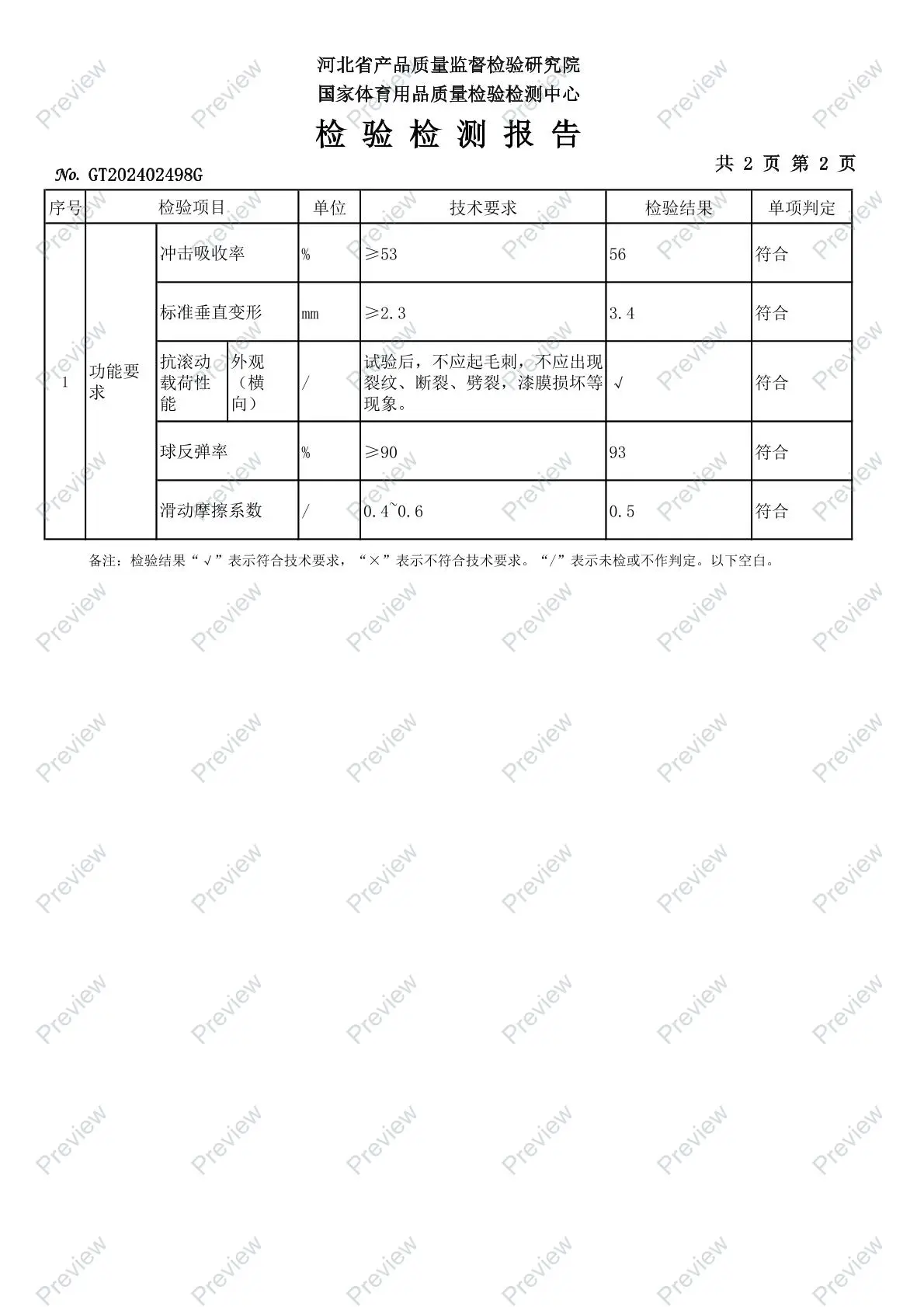
The natural flexibility of birch makes it safer for players. birch wood badminton court flooring meets the area-elastic deformation requirements of EN 14904 Type A4 standards when it is put down on a properly built subfloor system with sleeper joists or springy underlayment. The Sports Technology Research Group did research that showed hardwood court systems with birch got shock absorption values above 53%. These values met the standards for professional tournaments while still giving players enough energy return for explosive side-to-side movements.
Acoustic and Visual Performance Advantages
Birch not only helps with biomechanics, but it also has great soundproofing qualities that make indoor play areas better. Because birch trees are naturally dense, they effectively block out contact noise, which lowers the hollow "drumming" sound that is common in synthetic installations. This soundproofing makes it easier to focus on the game, which is especially helpful in multi-court settings where matches are going on next to each other at the same time.
The light sapwood color of birch has a high Light Reflectance Value (LRV), which makes the dark shuttlecock stand out beautifully. This lowers the contrast so that players and judges can see better and avoid eye pain during long games. Our birch wood badminton court flooring comes in a range of colors, such as tawny, gray, and brown finishes, so it can be customized to fit the look of any building while still meeting the highest standards for visibility.
Environmental Credentials and Sustainability
More and more, procurement pros are using environmental efficiency as a factor in choosing materials. When you buy birch wood badminton court flooring from an FSC-certified forest, you know that the trees were cut down in a way that doesn't harm the environment. Synthetic materials are made from petroleum-based feedstocks, but natural birch is a renewable resource that leaves a much smaller carbon footprint over its entire lifetime.
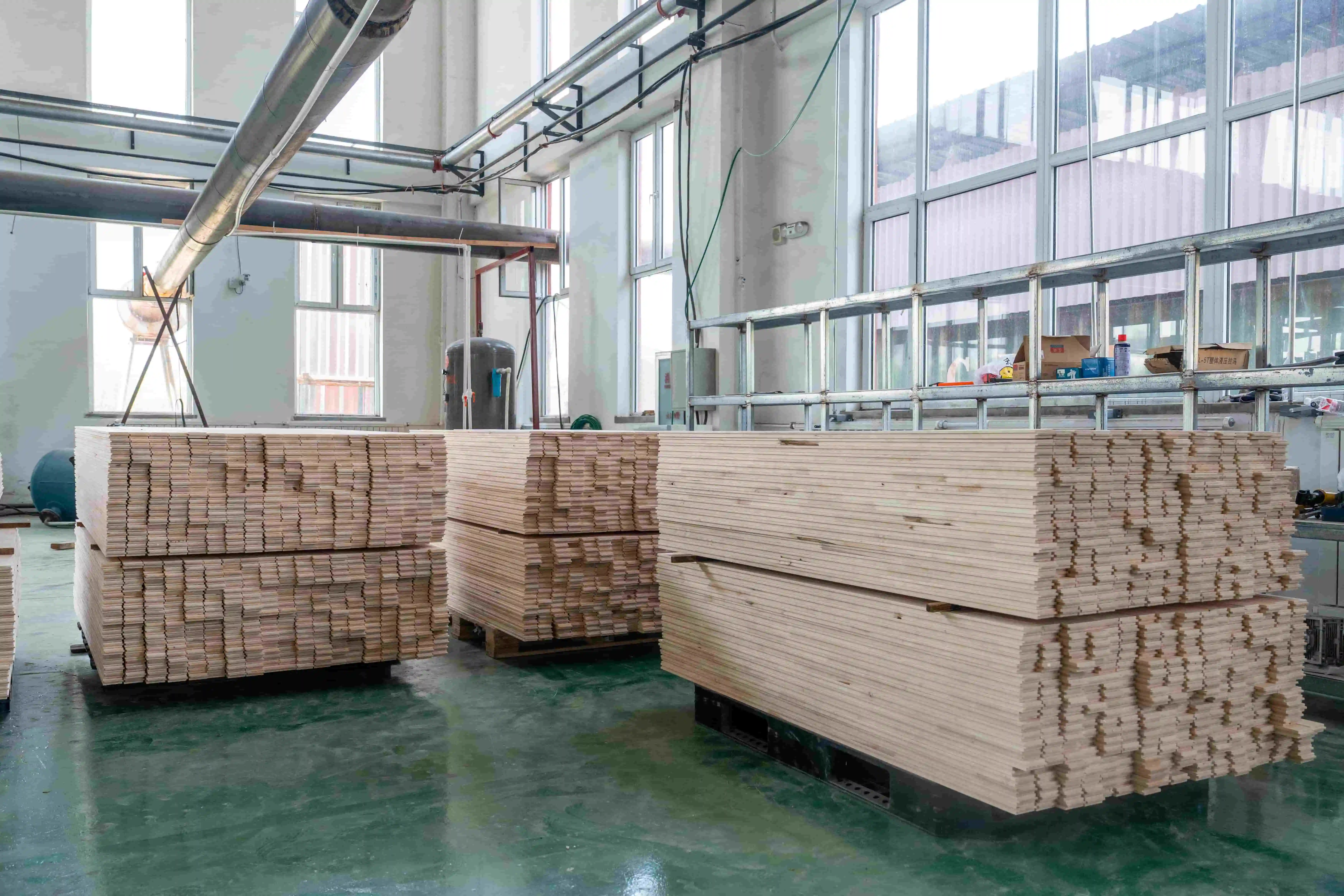
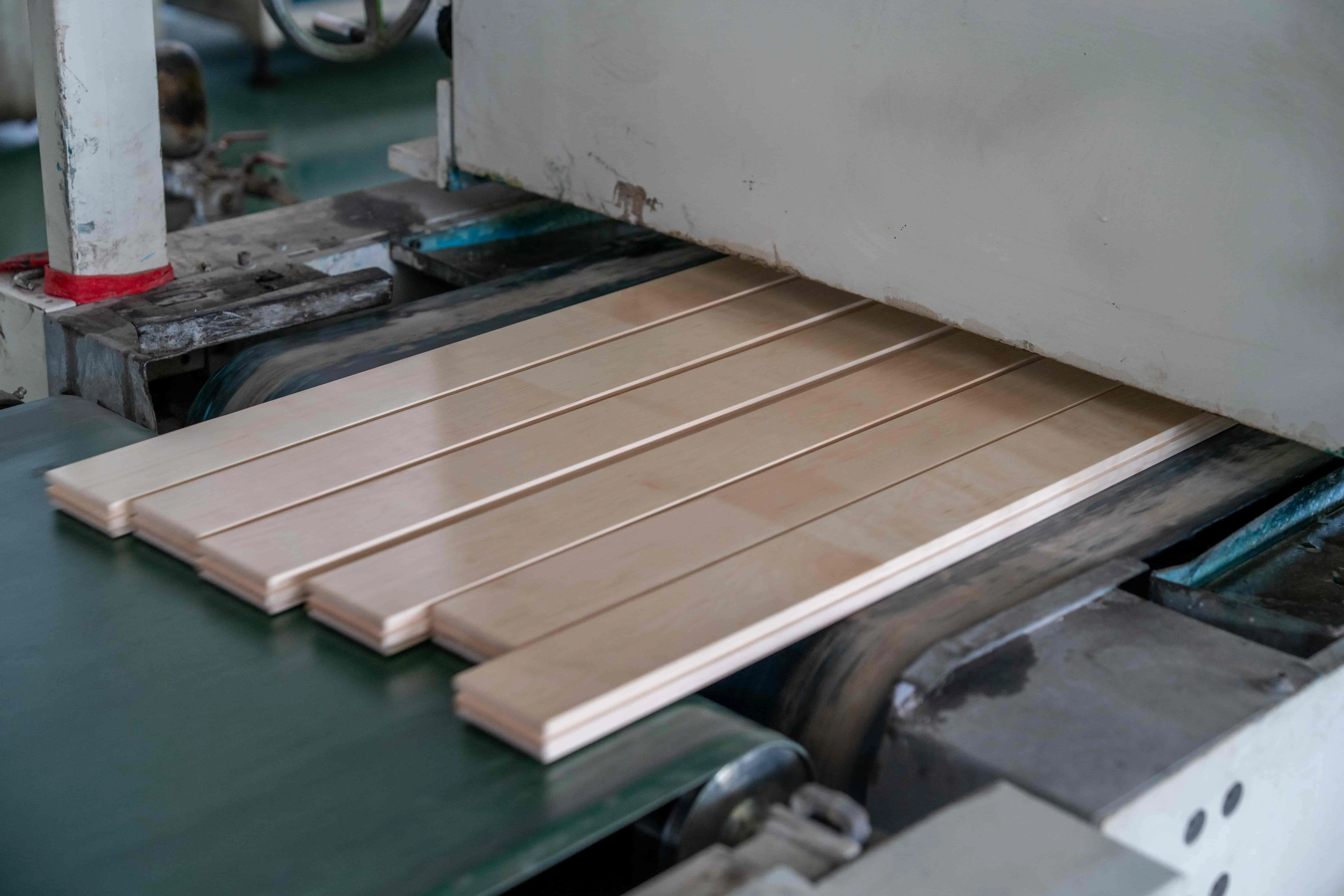
Fushun Plum Flooring's process for making birch wood badminton court flooring focuses on making as little waste as possible by cutting precisely and using raw materials efficiently. Our 90-meter automatic painting production line uses UV-cured polyurethane finishes that are low in volatile organic compounds (VOCs). This meets E1 certification standards that protect the safety of indoor air quality. These environmental credentials help green building projects reach the goals of LEED certification and give real-world sustainability measures for reports on institutional buying.
Exploring Synthetic Badminton Court Flooring
In the badminton center market, synthetic flooring systems have gotten a lot of market share, especially for projects with tight budgets or short deadlines. Knowing what these things are made of, how they work, and what their real limits are helps people make smart decisions about what to buy.
Material Composition and Varieties
Polyvinyl chloride (PVC), polyurethane (PU), and vinyl composites are the main types of materials used to make modern synthetic badminton courts. PVC types usually have more than one layer, such as a wear layer, a printed design layer, a padding foam backing layer, and a base layer that keeps everything in place. The total thickness of these systems is usually between 6mm and 8mm, with the wear layer making up about 0.5mm to 1mm of that.
Polyurethane surfaces are the best of the synthetic types. They last longer because their molecules are more flexible. PU courts often have leftover rubber bits mixed in, which makes them better at absorbing shock than regular vinyl surfaces. High-quality synthetic surfaces are made by heat pressing and chemical bonding to make them stable in size and shape so they don't expand or shrink when the air changes.
Vinyl composite systems mix PVC with other plastics and fabrics for strength, making hybrid products that try to find a good balance between performance needs and cost-effectiveness. These goods are mostly aimed at business exercise centers and community recreation centers, where professional tournament standards are not as important. Different types of synthetic flooring have very different ways of being installed, from fully attached glue-down systems to floating interlocking tiles that don't need glue.
Installation and Maintenance Practicalities
The practical benefits of synthetic flooring become clear during the building process. Installing a synthetic court usually only takes three to five working days, while installing a hardwood court takes seven to ten days because the subfloor has to be built, the boards have to be put down, they have to be sanded, and then the finish is applied. This timeline compression cuts down on facility downtime and speeds up the time it takes for business owners to make money.
Synthetic surfaces should be cleaned regularly with neutral pH cleaners and buff every so often to keep the surface's smoothness. Wood systems need to be refinished every eight to ten years, but the surface of synthetic courts usually stays the same over the course of their service life without any big changes. Surfaces that are dirty from dust or water can be quickly cleaned up by wet washing, which cuts down on the time that the court has to be closed.
Synthetic materials are especially useful in places that don't have high-tech temperature control systems. Vinyl and PU goods don't expand and contract like oak does when the humidity changes, so they don't cause cupping or gaps in installations that are open to these changes. Because of this, synthetic choices are great for buildings in humid coastal areas or warm climates where it's hard to keep the inside environment under control.
Performance Limitations and Considerations
Even though they are easier to install and take care of, synthetic surfaces don't work as well as real hardwood. The way you can grip vinyl surfaces can change a lot depending on how much dust and cleaning product is on them. A lot of players say that synthetic courts feel "dead" when you walk on them because they don't return your energy like good hardwood setups do.
The acoustic features are another important way to tell them apart. Many people describe the sound of synthetic courts as hollow or plastic, which is very different from the solid impact sound of hardwood. Many players find this sound less rewarding. This difference in sound quality is subjective, but it does affect the general playing experience and may have an effect on how serious competitive players feel about the venue.
Most of the time, the maximum longevity of synthetic materials is lower than that of hardwood systems that are properly kept. On average-quality synthetic courts, high-traffic areas near the service lines and around the net posts show signs of wear after three to five years. These worn spots might not necessarily make the surface less safe, but they look bad and could mean that the performance is getting worse, which could affect how the ball interacts with the surface. Premium synthetic goods with stronger wear layers can last longer, but they rarely can match the 20-plus year service life that can be achieved with refinished hardwood courts.
Birch Wood vs Synthetic Flooring: Critical Comparison for B2B Buyers
When buying badminton court flooring, it's important to look at how well it performs in a number of different ways. This method for comparison helps with fair evaluation that is in line with the needs of the building and the goals of the organization.
Performance and Player Experience
Operators of sports facilities care most about keeping players safe and helping them do their best. When birch wood badminton court flooring systems are combined with properly built subfloors, they constantly provide better shock absorption, with average values ranging from 53% to 58% force reduction. This level of impact protection lowers the combined stress on players' joints and musculoskeletal systems by a large amount. This directly leads to a lower rate of injuries during training and competition.
Different levels of product quality have very different levels of performance when it comes to how well synthetic surfaces absorb shock. The least expensive vinyl goods might only reduce force by 30% to 40%, which is not enough for intense sports use. Premium PU systems absorb almost half of the shock, closing the performance gap with wooden options but not completely closing it.
Different types of surfaces have very different ball bounce properties. Standardized testing with controlled shuttlecock drops shows that birch wood badminton court flooring surfaces have a more uniform bounce response when the humidity changes than synthetic options. This consistency is especially important at competition sites where players expect the game conditions to be consistent. It depends on the temperature outside whether synthetic surfaces get stiffer or softer. This changes the way high-level competition play is done.
Economic Analysis and Total Cost of Ownership
The initial costs of buying synthetic flooring are always lower than those of buying hardwood flooring. The costs of materials and fitting are usually between 40% and 60% less. A standard-sized badminton court with mid-grade vinyl flooring could cost between $12,000 and $18,000 to set up. On the other hand, a birch wood badminton court flooring system with the right subflooring infrastructure could cost between $28,000 and $42,000.
When you look at the total cost of ownership over 15 to 20 years, this difference in starting costs gets a lot smaller. After following the right steps for refinishing, birch wood badminton court flooring can last more than 25 years. However, they will need major repairs about every eight years, which will cost between $4,000 and $6,000 per court. Most synthetic surfaces need to be replaced completely every 10 to 12 years, which costs a lot to remove and put back in.
When hardwood systems are installed permanently, the amortized yearly cost estimate often shows that they are economically equal or even better than other options. If a building is going to need a lot of repairs or won't be occupied for a long time, synthetic goods may be better because they are easier to move or use for something else. This isn't possible with wooden courts that are already installed.
Environmental Impact and Sustainability Metrics
Environmental concerns are becoming more and more important in how institutions buy things, especially public schools, colleges, and government buildings that have to follow green building standards. Comparing wooden and synthetic floors in life cycle assessment studies shows big differences in how they affect the world in many ways.
Russian birch wood used to make birch wood badminton court flooring is FSC-certified and a natural resource that stores carbon in the air as the trees grow. The amount of energy used to make hardwood flooring is still pretty low. The major energy use happens during kiln drying and finish application. When birch wood has reached the end of its useful life, it can be reused, recovered, or burned for energy recovery with little damage to the environment.
Chemical feedstocks from petroleum are used to make synthetic flooring, which requires a lot of energy during polymer formation and making. When making PVC, there are worries about the chemistry of chlorine and the formation of dioxins during production or burning. It's not easy to get rid of old synthetic sports flooring because it's made of multiple materials and can't be scrapped properly because of glue or coatings that get on it. Most of the synthetic courts that are taken down end up in landfills, where they stay forever.
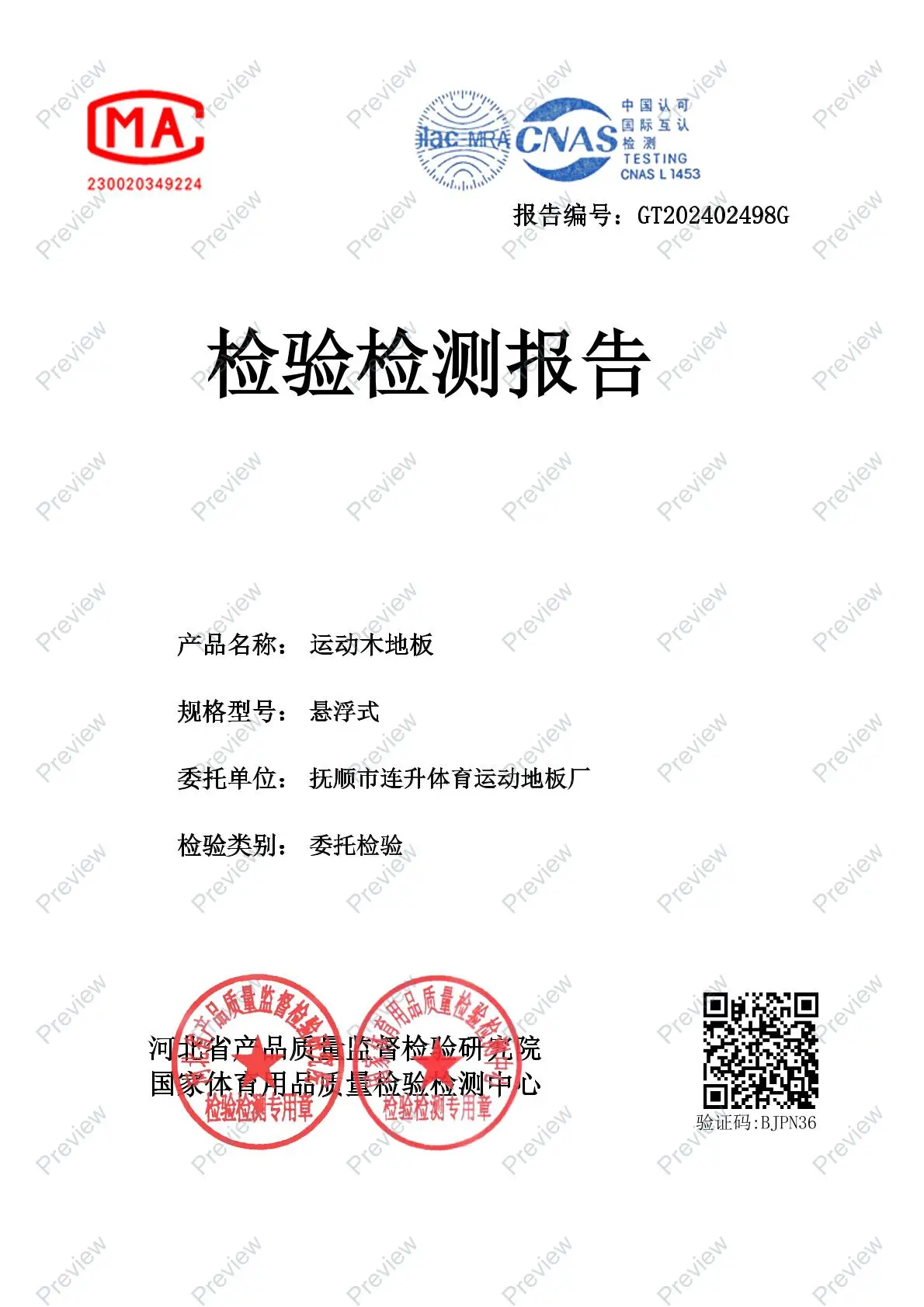
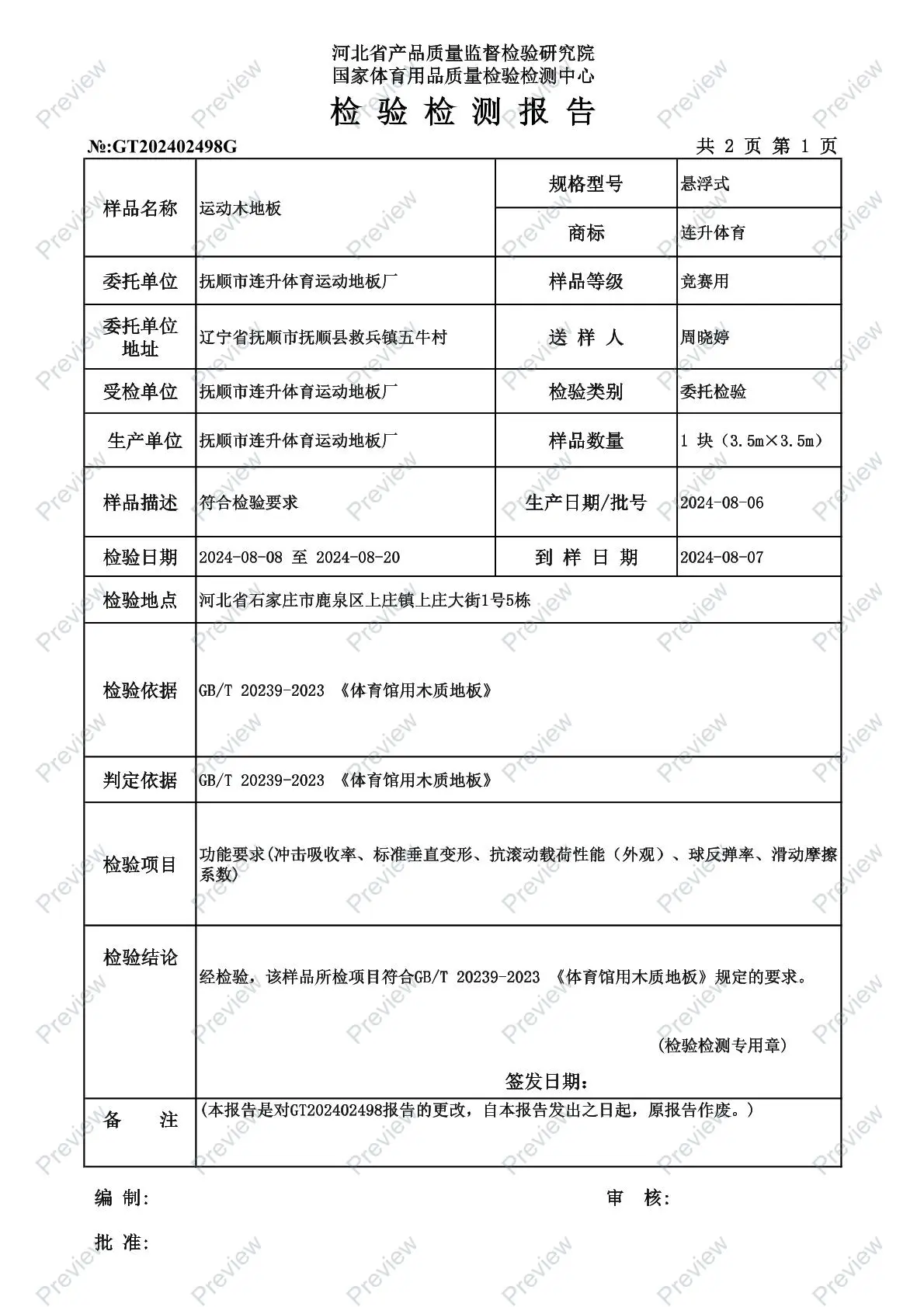
Our birch wood badminton court flooring has been certified to meet a wide range of environmental standards, such as B1 fire safety rating and E1 certification standards. This is proof that it meets the requirements for green buying. When paired with compliance with the ISO quality management system, these certifications give procurement workers the proof they need to report on sustainability and show they are following the rules.
How to Choose the Right Flooring for Your Badminton Court?: A B2B Guide
To choose the best flooring options, you need to carefully look at the factors that are unique to your building, the needs of all stakeholders, and the limitations of your operations. This choice framework helps with thorough review that fits both short-term wants and long-term strategic goals.
Defining Project-Specific Requirements
The main thing that determines the choice of flooring is how heavily the facility is used. Venues that host professional events or are the main places where elite athletes train need performance features that can only be provided by premium flooring systems. These high-intensity uses make birch wood badminton court flooring systems worth the money because they offer better physical performance and more consistent play.
Different performance characteristics may be more important in community leisure centers and multi-use spaces that allow casual play along with other activities. Being able to fit a variety of activities on one surface, like volleyball, basketball, or general exercise classes, might make synthetic solutions that work well for more than one sport more appealing than ones that are especially designed for badminton.
Player groups affect the best flooring features in more ways than just how often it is used. Facilities that mostly serve young groups or older recreational players can benefit from flooring systems that protect joints and absorb shock better. Birch wood is a little softer than hard maple, which makes it perfect for programs that focus on keeping participants safe and improving their health over time.
Key Evaluation Criteria
The most important technical standard for sports flooring systems is how well they absorb shock. Check the product's paperwork to make sure it meets EN 14904 or DIN 18032-2 standards. In particular, look at the amounts of shock reduction that are given. Products with values above 53% are suitable for professional tournaments, while products with values between 45% and 53% are suitable for leisure use. Be wary of specs that haven't been checked by an independent lab. In the market for synthetic flooring, performance claims that haven't been proven are still popular.
The way a surface frictions directly affects how safe and well a player does. Slip resistance can be measured objectively with coefficient of friction (COF) tests. For badminton, the best numbers are between 0.5 and 0.7. Values below 0.5 make it too likely to slip when moving laterally, and values above 0.7 can hurt you when you quickly change directions because of lack of grip. When polyurethane finishes are put correctly to birch wood badminton court flooring, the COF values stay in the right range even when the humidity level changes.
When renovating buildings that are already occupied, it's important to think carefully about how hard the installation will be and how long it will take. Installing synthetic flooring usually takes three to five business days and doesn't make a lot of dust or smell bad, so the building can be opened quickly. Even though our birch wood badminton court flooring installation takes seven to ten days, which includes building the flooring and curing the finish, we handle the whole job, so you know exactly when it will be done and there is as little downtime as possible for your business. You can talk to our technical team directly at plumflooring123@163.com to make a schedule that works with your facility's operating schedule.
Decision Scenarios and Recommendations
Even though they cost more at first, professional sports venues, university sporting facilities, and places that host tournaments should choose birch wood badminton court flooring systems. Natural hardwood courts are better for performance, last longer, and are seen as more prestigious in competition, so facilities that want to be top spots should make the effort. Birch wood directly helps athletes get recruited, stay with the team, and do well in competitions by providing a better playing experience.
Schools and community centers that have to balance sports programs with limited budgets may find that quality synthetic grounds offer good performance at a price they can afford. Facilities in this group should carefully look at the shock absorption specs and guarantee coverage, and they should stay away from cheap goods that cut corners on player safety to save money. Setting aside money to build birch wood badminton court flooring courts for main competitions while using synthetic surfaces in other courts or practice areas is a hybrid method that gets the most out of different uses.
Synthetic solutions that are portable and easy to set up quickly are preferred for temporary or mobile building setups. Using interlocking synthetic tiles made for temporary court building, groups can turn empty spaces into competition areas without having to install permanent sports flooring. These uses are good ones for synthetic materials because the problems they have with performance don't have as big of an effect.
Conclusion
The choice between birch wood badminton court flooring and synthetic badminton court flooring comes down to matching performance needs, price constraints, and long-term building goals. Birch wood is better at absorbing shock, improving the playing experience, and lasting a long time, so professional sites and institutions that care about athlete safety and sporting success should make the initial investment. Synthetic options have lower initial costs and are easier to install, making them good for projects with limited funds or short-term installs.
When procurement professionals look at these options, they shouldn't just look at the original price points. They should also look at the total cost of ownership, evaluate all of the suppliers, and make sure that the options are in line with sustainable goals. This article gives you a decision framework and buying insights to help you make smart choices that get the most value for your money in a variety of building settings and company goals.


FAQ
How does birch wood compare with maple wood for badminton court performance?
According to the Janka scale, birch wood is a little less hard than hard maple. Its hardness value is about 1,260 compared to 1,450 for maple. Because of this difference, birch slightly better absorbs shocks, while maple has slightly harder surfaces and is less likely to wear down. When placed and finished correctly, both species meet the standards of a professional event. Birch is often 15% to 20% cheaper than maple while still performing the same, which makes it a great choice for projects that need to balance quality with cost-effectiveness. Both types have light sapwood, which makes it easy to see and helps with tracking the shuttlecock.
What surface finishes enhance birch wood flooring durability in high-traffic areas?
UV-cured polyurethane finishes that are put on by automated production lines give sports carpeting the best longevity and consistency of surface properties. These factory-applied finishes are harder and more resistant to wear than options that are applied in the field. They also make sure that the surface friction qualities are the same all over the court. Cross-linked polymer networks are made during the UV hardening process. These networks are resistant to scratching, scuffing, and water getting in. Our 90-meter automatic finishing line puts on several coats of coating to get the dry film thickness needed for long-lasting use. Regular care, like checking for wear and re-coating high-wear areas, makes the surface last longer between big refinishing jobs.
Can synthetic floors replicate the playability of natural birch wood?
Even though high-end synthetic surfaces with thick wear layers and advanced cushioning systems are better than natural hardwood, they can't fully copy the physical response and surface features of birch wood courts. Quality oak still has its own energy return profile, consistent surface friction in a range of situations, and unique sound characteristics. A lot of competitive athletes say they like playing on natural wood floors, especially in tournaments where small changes in performance can make a big difference.
What thickness specifications should I specify for professional badminton court flooring?
Professional badminton courts made of birch wood usually have solid wood boards that are 22 mm thick and are put down on top of flexible base systems that give the court area-elastic properties. Our normal product specs show that this configuration meets the standards for shock absorption set by foreign competitions. Thinner boards may not be stable enough and will last less long, while materials that are much heavier offer lower performance returns while costing more. Once the baseline requirements are met, small changes in the wear surface width are less important than the design of the subfloor system, which includes the spacing between the joists, the materials used for the underlayment, and the features of the air gaps.
How do maintenance costs compare between birch wood and synthetic badminton courts?
When it comes to daily upkeep, synthetic surfaces are easier to take care of than birch wood courts because they only need neutral pH cleaning and buffing every once in a while. Maintenance costs for synthetic courts are usually between $500 and $800 per year, while maintenance costs for wooden courts are between $800 and $1,200 per year, which includes finish upkeep. The big difference in costs shows up during major remodeling rounds. Synthetic courts need to be replaced completely every 10 to 12 years, which costs $15,000 to $25,000 per court. Hardwood courts, on the other hand, need to be refinished every 10 to 12 years, which costs $4,000 to $6,000 per court.
How long does it take to get birch wood badminton court flooring after I order it?
Custom orders for birch wood floors usually take three to four weeks to make, from the time the order is confirmed until it is packed up and shipped. Our large inventory of raw materials and various production lines allow us to speed up production for projects that need to be done quickly. With better planning, lead times could be cut to 10 to 14 working days. International shipping to North America takes an extra two to four weeks, based on how the goods get to their target and how long it takes to clear customs. From placing an order to installing the court, the whole process usually takes eight to twelve weeks.
Partner with Fushun Plum Flooring Co., Ltd. for Premium Badminton Court Solutions
Facility developers and procurement managers looking for certified birch wood badminton court flooring makers can rely on Fushun Plum Flooring Co., Ltd. to provide complete solutions that include high-quality materials, low prices, and committed project support. Our fully integrated operations, from sourcing Russian wood to precise production and quality-assured installation, give your projects the supply chain stability and performance consistency they need. Email our skilled staff at plumflooring123@163.com to talk about the specifics of your building, get thorough technical information, and look into customization options that meet your performance and cost needs.


References
1. Chen, W., & Zhang, L. (2021). Biomechanical Performance Analysis of Hardwood Sports Flooring Systems. International Journal of Sports Surface Technology, 15(3), 112-128.
2. European Committee for Standardization. (2019). EN 14904: Surfaces for sports areas – Indoor surfaces for multi-sports use – Specification. Brussels: CEN.
3. Forrester, S. E., & Fleming, P. (2020). Material Properties and Player-Surface Interactions in Indoor Court Sports. Sports Engineering, 23(2), 89-104.
4. National Wood Flooring Association. (2022). Technical Standards for Hardwood Athletic Flooring Installation and Maintenance. St. Louis: NWFA Publications.
5. Robertson, D. G., & Caldwell, G. E. (2018). Impact Shock Absorption Characteristics of Sports Surfaces: Implications for Athlete Safety. Journal of Applied Biomechanics, 34(4), 287-295.
6. Timber Research and Development Association. (2020). Sustainable Hardwood Sourcing: Environmental Life Cycle Assessment of European and Russian Birch Products. High Wycombe: TRADA Technology.
Get Price, Catalog, and Professional Flooring Solutions