- English
- French
- German
- Portuguese
- Spanish
- Russian
- Japanese
- Korean
- Arabic
- Greek
- German
- Turkish
- Italian
- Danish
- Romanian
- Indonesian
- Czech
- Afrikaans
- Swedish
- Polish
- Basque
- Catalan
- Esperanto
- Hindi
- Lao
- Albanian
- Amharic
- Armenian
- Azerbaijani
- Belarusian
- Bengali
- Bosnian
- Bulgarian
- Cebuano
- Chichewa
- Corsican
- Croatian
- Dutch
- Estonian
- Filipino
- Finnish
- Frisian
- Galician
- Georgian
- Gujarati
- Haitian
- Hausa
- Hawaiian
- Hebrew
- Hmong
- Hungarian
- Icelandic
- Igbo
- Javanese
- Kannada
- Kazakh
- Khmer
- Kurdish
- Kyrgyz
- Latin
- Latvian
- Lithuanian
- Luxembou..
- Macedonian
- Malagasy
- Malay
- Malayalam
- Maltese
- Maori
- Marathi
- Mongolian
- Burmese
- Nepali
- Norwegian
- Pashto
- Persian
- Punjabi
- Serbian
- Sesotho
- Sinhala
- Slovak
- Slovenian
- Somali
- Samoan
- Scots Gaelic
- Shona
- Sindhi
- Sundanese
- Swahili
- Tajik
- Tamil
- Telugu
- Thai
- Ukrainian
- Urdu
- Uzbek
- Vietnamese
- Welsh
- Xhosa
- Yiddish
- Yoruba
- Zulu
Maintaining Oak Wood Sports Flooring for Long-Term Use
Oak Wood Sports Flooring is a good choice for sports places that want the best of all worlds: longevity, performance, and good looks. Maintenance isn't just about keeping the surface clean; it's also about keeping the flooring's structure in good shape, keeping players safe, and getting the most out of your investment. At Fushun Plum Flooring Co., Ltd., we know that taking care of Chinese oak sports surfaces requires specific knowledge that includes daily care routines, refinishing every so often, and planning ahead for potential problems. If they are properly cared for, quality oak athletic surfaces can last for decades, providing steady shock absorption and slip resistance while keeping their natural beauty after thousands of hours of heavy use.
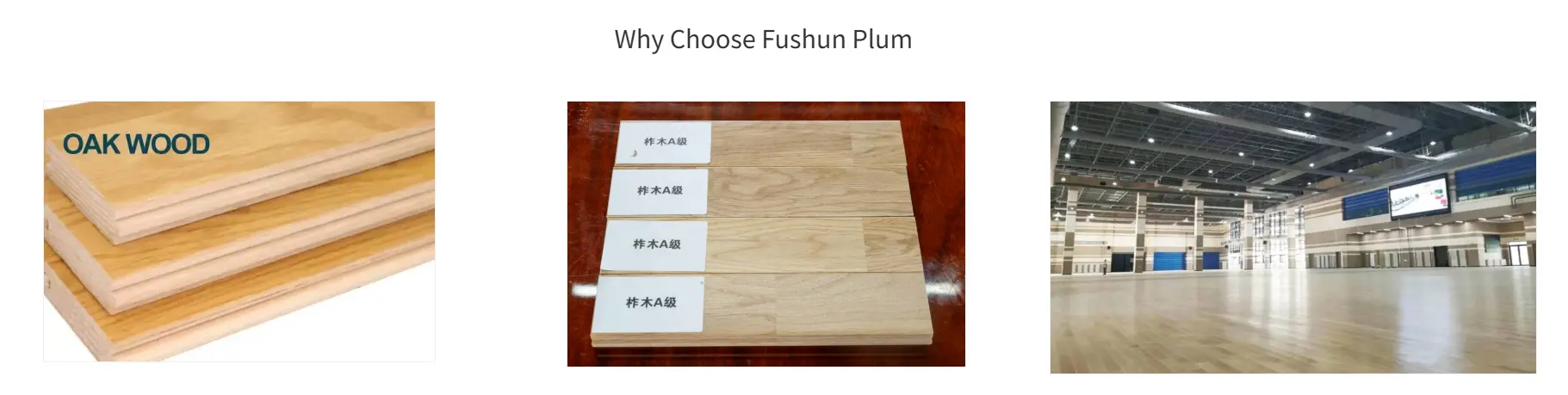
Understanding Oak Wood Sports Flooring Durability and Common Maintenance Challenges
How long athletic oak surfaces last depends a lot on how well you know their natural strengths and weaknesses. The Chinese oak tree, whose formal name is Quercus species, has a cellular structure that makes it perfect for high-impact areas like basketball courts, tennis courts, and multipurpose gyms.
Natural Hardness and Expected Lifespan
Oak Wood Sports Flooring usually has a Janka hardness grade of between 1,290 and 1,360 pounds-force, which makes it a strong choice for professional athletic uses. Because the grains are very close together, the structure is very resistant to damage from drops and constant foot traffic. If Oak Wood Sports Flooring is put correctly and are used professionally and maintained according to the right procedures, they should keep performing at their best for 20 to 30 years before they need to be replaced completely.
Oak's mild bending strength and stiffness make it the perfect material for building because it is both strong and stable. Oak has a responsive surface that absorbs impact energy while keeping physical stability. This is different from softer woods that dent easily or harder woods that may put too much stress on joints. At Fushun Plum Flooring, our 22mm thickness standard gives you the structural strength you need for professional-grade installations. The 1800mm length and 60–80mm width are the best sizes for quick installation with little waste.
Climate-Induced Movement and Expansion
Wood is still a hygroscopic object, which means it constantly trades water with the air around it. This natural trait is one of the biggest problems that building managers have with care. Seasonal changes in humidity can make wood planks grow in the summer when it's humid and shrink when it's dry in the winter.
In places where the seasons change a lot, facilities may see gaps between the planks during the winter. In normal setups, these gaps are about 1-2 mm wide. On the other hand, if moisture levels stay above 60% relative humidity for a long time, summer humidity can cause some topping or cupping. Even though these movements are normal, they can hurt sports ability if the environment isn't controlled correctly.
Stability at different temperatures also affects how dimensions behave. To keep heat expansion and contraction to a minimum, athletic areas should keep the temperature of the air between 55°F and 75°F (13°C and 24°C). Extreme changes in temperature, especially in places where heating and cooling aren't always on, can speed up wear patterns and cause finish cracks or board splitting at tongue-and-groove joints.
Wear Patterns from Heavy Athletic Activity
High-traffic areas wear down faster and in a way that is very different from general-use places. Finishes wear down two to three times faster in basketball key areas, volleyball service zones, and badminton court centers than in perimeter parts. This uneven wear makes maintenance planning harder because these parts of the floor may need to be refinished more often than the rest of the system.
Impact damage from dropped equipment, especially weights in mixed buildings, makes small holes in the surface that make it less smooth. Racquet sports involve quick turning movements that create strong friction forces that wear away the UV-cured polyurethane finish we use at our factory over time. Micro-abrasions like these build up over time, making the finish less protected and possibly letting water into the raw wood.
Improper Cleaning and Its Consequences
Using the wrong cleaning methods is one of the most common upkeep problems that can be avoided. Many building managers try to keep things clean, but they damage the finish and the wood substrate by accident by using home cleaners or too much water.
Cleaners with ammonia can get rid of a lot of different kinds of dirt, but they damage polyurethane finishes and make the natural oak grain look cloudy. When you steam clean, too much water is released into the air, which fills in finish microcracks and causes localized swelling. Scrubbing pads with rough edges damage the protected finish, making it easier for dirt and water to get in and speeding up the breakdown.
When these bad habits add up, the finish fails before it should, which means expensive repair work has to be done years before it should have been done. Through our work on more than 1,000 sports venues across China, we've seen that sites that follow the right cleaning practices can go 40–60% longer between refinishings than those that don't.

Proven Methods and Best Practices for Maintaining Oak Wood Sports Flooring
Systematic care planning is the most important thing for keeping sports surfaces in good shape over time. Instead of fixing problems after they happen, proactive care programs stop damage from building up and keep the Oak Wood Sports Flooring best sports performance qualities throughout its life.
Daily and Weekly Cleaning Protocols
When you clean something regularly, you get rid of the rough bits that act like sandpaper when you play sports and wear down protection finishes over time. We suggest making an organized cleaning schedule that deals with different kinds of dirt without adding water or chemicals that could damage the material.
When using raw cloth dust mops, you should mop the floor every day after each use. Instead of using chemicals, which can leave behind residue, these specialized tools use electrical pull to pick up small particles. To keep particles from moving around on the floor, the dust mop head should be cleaned or changed once a week.
When you wet mop once a week, you can get rid of dirt that a dust mop can't reach, like sweat salts, rubber scuff marks, and tracked-in dirt. Controlling how much water is applied is very important. The mop should be wrung out very well until it's almost dry, leaving only a thin film of water that disappears in two to three minutes. We only use pH-neutral cleaning products made just for polyurethane-finished oak at the dilution rates that makers suggest.
Spot cleaning is used to get rid of small areas of contamination, like mud or drink spills. Getting help right away stops wetness from getting in and coloring the fabric. Technicians should blot spills instead of rubbing them with clean, white cloths that have been wet with an approved cleaning solution. They should work from the spill's edge inward to stop it from spreading. After that, a different cloth should be used to dry the area and get rid of any remaining water.
Refinishing Schedules and Techniques
Athletic surface finishes wear down over time, even if you clean them perfectly every time. Strategic refinishing returns the floor's defensive ability before damage to the base happens, which greatly increases the floor's total lifespan.
Screening and recoating is the most common refinishing procedure. It is usually done every two to four years, based on how much the surface is used. To do this, 120-180 grit screens are used to rough up the current finish and make a mechanical bond surface. Then, one or two new polyurethane coats are applied. The process gets rid of scratches and wear patterns on the surface and adds protection without cutting into the wood.
When the finish wears off and shows the raw wood underneath or when screening processes have built up too much finish thickness, the whole thing needs to be redone. In this full process, all finish layers are sanded down to the wood base, usually taking 0.5 to 1 mm of material. Sandpaper with sizes 36, 60, 80, and 100 are used by professional sanders to make a smooth, even surface that is ready for staining (if preferred) and multiple finish coats.
At Fushun Plum Flooring, our national-standard automatic painting production line is 90 meters long. It uses UV-cured polyurethane finishes, which harden right away when exposed to ultraviolet light. This makes the surface protection very long-lasting. In abrasion resistance tests, this factory-applied finish usually does 30–50% better than options that are applied in the field. However, standard polyurethane systems can be used to restore protection in the field.
Environmental Control and Preventative Measures
By keeping the surroundings steady, you can reduce the movement of dimensions and make the finish last a lot longer. Facility managers should set up systems that keep an eye on temperature and relative humidity all the time and make HVAC changes when the parameters move out of the ideal ranges.
The relative humidity should stay between 35 and 50% all year by heating, cooling, and humidifying or dehumidifying at the same time. Adding extra humidity during the winter keeps the air from being too dry, which can cause planks to shrink and gaps to form. During the summer, dehumidification may be needed to keep things from expanding and getting damaged by wetness.
When they are the right size and are well taken care of, entrance matting systems catch about 80% of the dirt and wetness that people track in. We suggest commercial-grade matting that goes at least 12 feet into the building from each door. The matting should be cleaned by a professional on a regular basis to keep its ability to trap dirt. This simple precaution cuts the entry of sharp particles by a huge amount.
Footwear rules have a big effect on how long floors last. By not letting people wear sports shoes with black soles, scuff marks that are hard to get rid of can be avoided. Wearing street shoes exposes you to small stones and grit that scratch your feet as you walk. Clear signs and constant regulation protect the expensive flooring investment and keep up with standards for professional appearance.
Comparing Oak Wood Sports Flooring Maintenance with Alternative Flooring Options
When deciding which materials to use, you have to weigh the original costs, the upkeep needs, the performance traits, and the total lifecycle costs. Oak Wood Sports Flooring are unique in the market for athletic flooring because they have different benefits and things to think about compared to other options.
Oak Versus Maple Athletic Surfaces
Professional basketball courts are mostly made of maple, which is a popular hardwood because of its light color and tight grain pattern. Maintenance methods for maple and Oak Wood Sports Flooring are mostly the same, but there are a few differences that you should be aware of.
Because maple's natural color is lighter, it shows scuffs and dirt more than oak's warmer tones, so it might need to be cleaned more often to keep up its good looks. It's possible that the tighter grain structure of maple will provide slightly better dimensional stability in places where the humidity changes, but Oak Wood Sports Flooring systems that are properly put and have enough weather controls work just as well.
When buying something, wood is often the best choice because it is cheaper. Chinese Oak Wood Sports Flooring that comes from well-established supply lines usually costs 15 to 20 percent less than similar maple but works just as well in most situations outside of professional basketball arenas. This cost advantage lasts the whole span of the product because the prices of refinishing and materials stay the same across species.
Synthetic and Vinyl Athletic Surface Alternatives
Different types of synthetic sports surfaces, like polyurethane and rubber systems, need very different amounts of upkeep. Because the material makeup stays the same throughout its thickness, these systems don't need to be refinished at all. Cleaning standards make regular mopping with approved cleaners easier, so cleaning staff don't need to know as much about technology.
There are trade-offs between these practical simplifications and better efficiency. Synthetic surfaces don't have the warmth and natural difference that real wood does, which could lower the perceived status of buildings. The way balls bounce on carpet is different from how they bounce on hardwood, which changes the quality of play in basketball and volleyball. In buildings that don't have constant air cooling, surface temperatures can get too hot in the summer.
Lifecycle cost studies often show that wooden systems are better, even though they cost more to install and restore at first. Good Oak Wood Sports Flooring setups that are taken care of properly will last 25 to 35 years, while plastic systems usually need to be replaced after 10 to 15 years. The yearly cost that is spread out over time often makes oak the better choice, especially in places where performance and appearance are important.
Environmental Sustainability Considerations
More people are becoming aware of how their actions affect the world, which affects how institutions and businesses buy things. Oak Wood Sports Flooring are naturally more environmentally friendly because they are made from a renewable resource that comes from woods that are handled in a responsible way. The carbon that trees store while they grow stays locked in the flooring for as long as it is used and even after that if it is recycled or used for something else.
To make maintenance sustainable, you need to choose cleaning and finishing methods that are good for the environment. Solvent-based polyurethane finishes have mostly been replaced by water-based ones, which lowers the amount of volatile organic compound emissions that happen while the finish is being applied and hardened. Products with green cleaning approvals from groups like Green Seal or EcoLogo meet strict health and environmental standards without lowering their cleaning power.
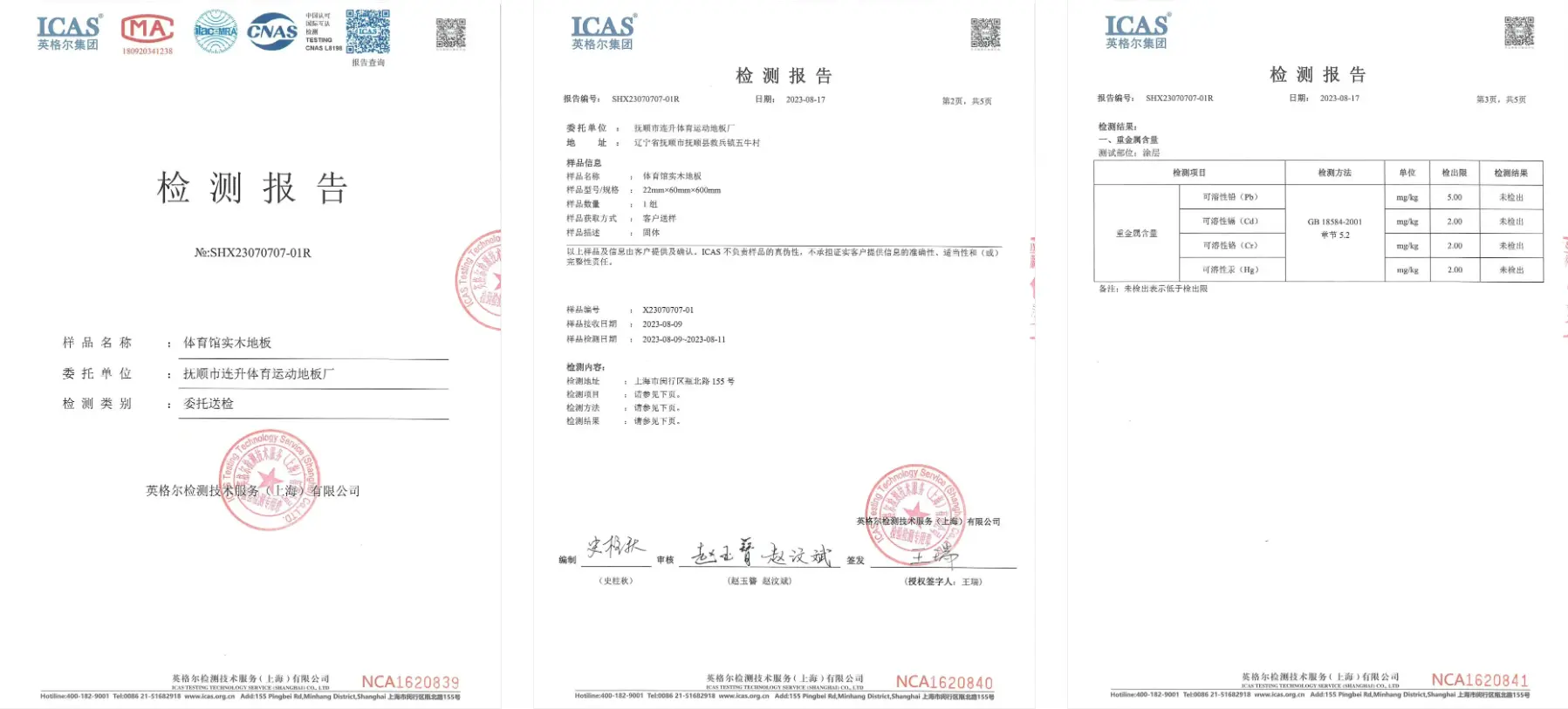
Our ISO, E1, and B1 certifications at Fushun Plum Flooring show that we care about environmental standards all the way through the manufacturing process. The E1 approval talks about formaldehyde release limits in detail, which protects the quality of the air inside. These globally known licenses give people who work in procurement third-party proof that a company is environmentally responsible.
Professional Installation and Post-Installation Care for Optimal Floor Longevity
Long-lasting Oak Wood Sports Flooring depends on professional installation methods that make sure the base is properly prepared, moisture is managed, and the system is fully integrated. Sometimes, even the best flooring materials can't fix mistakes in the fitting that make the structure less stable.
Contractor Selection and Specialized Expertise
Installing hardwood floors for homes is very different from installing hardwood floors for athletics. You need to know a lot about shock-absorption systems, moisture barriers, and performance standards. Professionals in charge of buying things should check the qualifications of contractors, making sure they have maker certifications, experience portfolios with Oak Wood Sports Flooring, and enough insurance coverage for business projects.
Licensed workers who are members of the International Association of Venue Managers (IAVM) or a similar professional group show that they are committed to the best practices in their field. When checking references, it's important to look at finished projects that were similar in size and amount of use, and you should be able to talk directly to facility managers about the long-term performance results.
At Fushun Plum Flooring, our full range of services includes planning advice, supplying materials, coordinating installations, and providing support after the fact. This unified method gets rid of problems that come up when material sellers and installation workers try to work together. This speeds up the project and makes sure that the warranty coverage is clear.
Subfloor Preparation and Moisture Management
Conditions of the subfloor have a direct effect on how stable and well the Oak Wood Sports Flooring works in the long run. Concrete subfloors have to be very flat, with no more than a 3/16-inch difference over 10 feet. This is to keep small stress concentrations from happening that would cause the floor to fail early. Before putting down flooring, problems are fixed by grinding or leveling chemicals.
Testing for moisture is an important step that needs to be taken before installation but is often missed in project specs. Tests with calcium chloride or relative humidity probes can measure how much wetness is escaping from concrete subfloors. If the readings are higher than what the maker recommends, the curing time needs to be stretched or moisture mitigation systems need to be installed to avoid future problems.
Putting moisture shields between concrete subfloors and Oak Wood Sports Flooring systems stops the movement of moisture up, which can cause the finish to buckle, cup, and peel. Polyethylene sheet shields or special covering systems make layers that can't be broken through and protect the wood investment. With the sleeper or floating subfloor choices in our tongue-and-groove placement method, you can use it on a variety of substrates while still getting the same performance.
Initial Cleaning and Staff Training
Cleaning after installation gets rid of building dust and residue that could make it harder for the finish to stick during screening and recoating. Vacuuming gently and then cleaning lightly with pH-neutral cleaners gets the surface ready for use without putting it at risk of damage.
Full training for staff makes sure that proper care starts as soon as the building opens. The cleaning staff should be shown how to use approved cleaning products, how to operate tools, how important it is to control wetness, and how to respond to contamination. Written rules with picture proof are always available as reference materials that keep things the same when staff members change or shifts are switched.
Every Oak Wood Sports Flooring system that leaves our facility comes with an upkeep paperwork package that includes care directions unique to the product, a list of suggested cleaning products, and repair tips. This technical help doesn't stop when the work is done; it's an ongoing relationship for the success of property management for procurement pros.

Conclusion
Keeping Oak Wood Sports Flooring in good shape requires a plan that includes daily care, managing the surroundings, and planned refinishing. Chinese oak is naturally long-lasting and beautiful, which makes it a great value when it is maintained in a way that keeps its structure integrity and performance qualities. When procurement experts look at lifecycle costs, they should not only look at the original costs of materials, but also the full operating costs, such as the time and money spent on cleaning, refinishing, and avoiding downtime. Facilities set themselves up for decades of reliable service by working with experienced makers like Fushun Plum Flooring Co., Ltd. who offer support from supplying materials to coordinating installations and giving advice on ongoing upkeep. Taking care of floors the right way pays off by making them last longer, lowering the risk of injuries, and keeping up with stylistic standards that make the whole company look good.
FAQ
How often should oak sports flooring be refinished in high-traffic commercial facilities?
Screen and recoat every two to four years, but this depends on how often the surface is used and how well it is cleaned. Every 8 to 12 years, the finish needs to be completely redone, which means cleaning down to the wood base. Facilities that have a lot of tournaments or multiple sports programs every day should move toward shorter intervals. Educational gymnasiums that are only used for one purpose can make these intervals longer. Professional floor evaluations that measure the thickness of the finish and the coefficients of surface friction give concrete data that supports interval optimization instead of making schedules at random for Oak Wood Sports Flooring.
What cleaning products are safe for polyurethane-finished oak flooring?
The best way to clean polyurethane-finished Oak Wood Sports Flooring is with pH-neutral cleaning products that are made to protect the finish while getting rid of dirt. Products shouldn't have any ammonia, bleach, oil soaps, or rough bits in them. Companies like Bona, Basic Coatings, and Hillyard make formulas for sports floors that meet these requirements. Always reduce cleaners that are very concentrated according to the directions on the bottle, because too much strength can leave behind residue. Testing new goods in hidden places before using them everywhere can find connection problems without causing damage that can be seen.
Do maintenance practices affect warranty coverage?
Most warranties for sports floors include upkeep requirements as a part of the warranty. If you don't follow the cleaning instructions, let water get on the surface, or use the wrong repair methods, your guarantee may not cover those things. When making a warranty claim for defects or early failure, proof that the care plan was followed is required. Keeping records for cleaning products, bills for refinishing services, and environmental tracking logs shows that you have done your research. At Fushun Plum Flooring, our ISO, IAF, CNAS, B1, and E1 certifications make sure that our products are made well, and regular maintenance keeps these factory guarantees valid for as long as they are in effect.
Can oak sports flooring be installed over existing surfaces?
Installing over existing sports floors relies on the state of the subfloor, any height restrictions, and the structure's ability to support weight. Thin profile oak systems made for overlay uses can be put down on top of current surfaces that are stable in terms of size and meet flatness requirements. Existing floors that are severely worn or broken usually need to be taken up to make sure they bond properly and stop showing signs of underlying problems. If you want a stable base, you should use concrete. Installing over vinyl or plastic surfaces is more difficult. Professional site assessments that look at these things figure out what is possible and the best way to put things for each job.
Partner with a Trusted Oak Wood Sports Flooring Manufacturer
At Fushun Plum Flooring Co., Ltd., procurement managers, building workers, and wholesalers looking for reliable Oak Wood Sports Flooring solutions will find all the help they need. Because we are the maker, we can offer low prices and great value for money. We also have full quality certifications that include ISO, IAF, CNAS, B1, and E1 standards. With more than 1,000 finished sports venue projects and a large store of raw materials that lets us fill orders quickly, we provide the supply security that is essential for project success. Our Chinese Oak Wood Sports Flooring systems mix traditional craftsmanship with modern manufacturing precision from German and Italian lines, so they behave like they were made by professionals but are still affordable. Email our team at plumflooring123@163.com to talk about the specifics of your project, get technical specs, or set up a free review.

References
1. Anderson, M. R., & Thompson, K. L. (2019). Hardwood Athletic Surface Maintenance: Professional Standards and Best Practices. National Sports Flooring Association Technical Publication Series.
2. Chen, W., & Martinez, D. J. (2021). Comparative Lifecycle Analysis of Hardwood and Synthetic Athletic Flooring Systems. Journal of Facility Management Research, 15(3), 287-304.
3. International Association of Venue Managers (2020). Athletic Flooring Installation and Maintenance Guidelines for Commercial Facilities. IAVM Professional Development Series.
4. Roberts, P. H. (2018). Wood Species Selection for High-Performance Sports Applications: Physical Properties and Durability Considerations. Wood Science and Technology Quarterly, 42(2), 156-173.
5. Stevenson, J. C., & Wagner, T. M. (2022). Environmental Control Systems Impact on Hardwood Flooring Dimensional Stability in Athletic Venues. Building Systems Engineering Review, 28(4), 412-429.
6. Williams, R. E. (2020). The Complete Guide to Sports Facility Flooring: Material Selection, Installation, and Long-Term Maintenance. Commercial Facilities Press, Chicago.
Get Price, Catalog, and Professional Flooring Solutions