- English
- French
- German
- Portuguese
- Spanish
- Russian
- Japanese
- Korean
- Arabic
- Greek
- German
- Turkish
- Italian
- Danish
- Romanian
- Indonesian
- Czech
- Afrikaans
- Swedish
- Polish
- Basque
- Catalan
- Esperanto
- Hindi
- Lao
- Albanian
- Amharic
- Armenian
- Azerbaijani
- Belarusian
- Bengali
- Bosnian
- Bulgarian
- Cebuano
- Chichewa
- Corsican
- Croatian
- Dutch
- Estonian
- Filipino
- Finnish
- Frisian
- Galician
- Georgian
- Gujarati
- Haitian
- Hausa
- Hawaiian
- Hebrew
- Hmong
- Hungarian
- Icelandic
- Igbo
- Javanese
- Kannada
- Kazakh
- Khmer
- Kurdish
- Kyrgyz
- Latin
- Latvian
- Lithuanian
- Luxembou..
- Macedonian
- Malagasy
- Malay
- Malayalam
- Maltese
- Maori
- Marathi
- Mongolian
- Burmese
- Nepali
- Norwegian
- Pashto
- Persian
- Punjabi
- Serbian
- Sesotho
- Sinhala
- Slovak
- Slovenian
- Somali
- Samoan
- Scots Gaelic
- Shona
- Sindhi
- Sundanese
- Swahili
- Tajik
- Tamil
- Telugu
- Thai
- Ukrainian
- Urdu
- Uzbek
- Vietnamese
- Welsh
- Xhosa
- Yiddish
- Yoruba
- Zulu
Natural Wooden Flooring: Sustainable Choices for Eco-Homes
Natural Wooden Flooring is a smart choice for eco-friendly projects when it comes to design greatness and eco-friendly building materials. This type of flooring is both environmentally friendly and highly useful. It is made from recyclable materials that improve the quality of the air inside while also being very durable. Green building certifications and long-term value are becoming more important in the construction business. Solid wood flooring options offer both good looks and measurable environmental benefits. Whether you're building a school, a business, or a large-scale development, knowing the technical and environmental benefits of real wood goods can help you make better choices about what to buy.
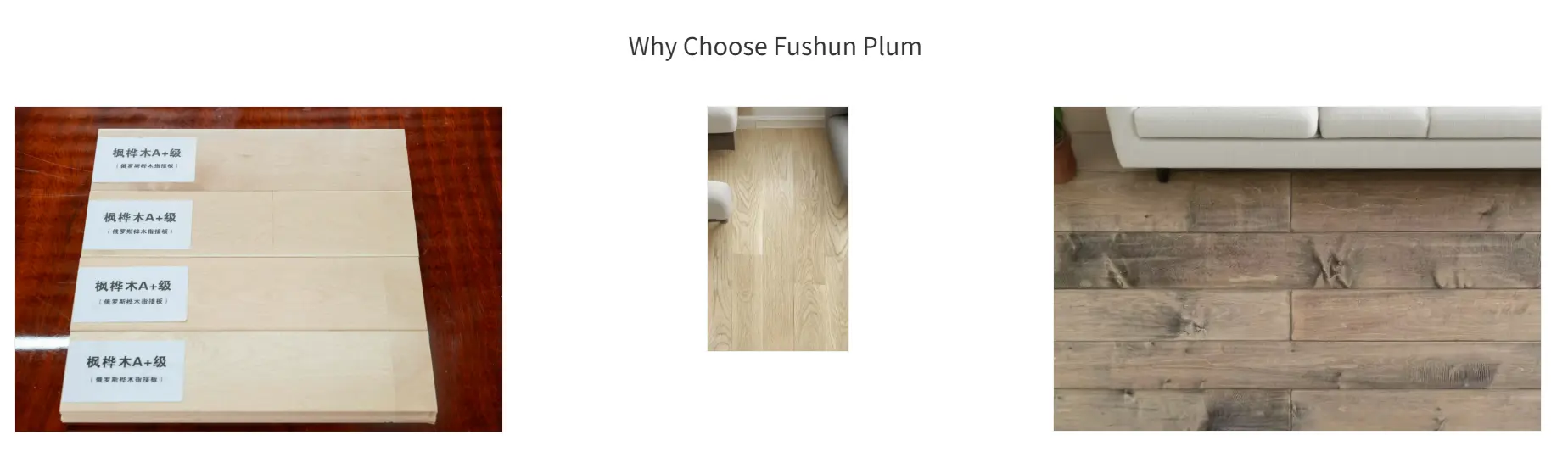
Understanding Natural Wooden Flooring: Benefits and Types
What Defines Authentic Wood Flooring?
Solid hardwood flooring is made from natural wood that was cut from a single piece. It is usually 18 mm thick, but the sizes can be changed to fit different fitting needs. Real wood flooring has a biological cellular structure throughout its whole makeup, unlike laminate goods with photographic images or vinyl options made of man-made materials. This difference is very important when looking at environmental certifications, the ability to repair, and long-term performance traits.
At Fushun Plum Flooring Co., Ltd., we only sell solid oak flooring made from Chinese oak that is found in a way that doesn't harm the environment. This type of oak is very easy to work with and has the hardness and moderate bending strength that are needed for high-traffic areas. Our goods come in lengths ranging from 300mm to 900mm, widths ranging from 57.2mm to 90mm, 120mm to 150mm, and a normal thickness of 18mm, so they can be used for a wide range of projects. The natural color differences, which come in tawny, gray, and brown shades, show off the real wood grain.
Environmental Advantages of Solid Wood Products
More than just coming from trees, hardwood flooring is environmentally friendly. During their growth cycle, trees take in carbon dioxide from the air. This carbon stays in the wood fiber even after it has been milled and installed. Studies from the Forest Products Laboratory show that wood that is gathered in a way that doesn't harm the environment is one of the few building materials that has a net-negative carbon footprint when replanting programs are part of the forestry practices.
Improving the cleanliness of the air inside is another measured benefit. While fake flooring may release volatile organic compounds from glue or surface treatments, solid wood that has been properly finished only releases small amounts of chemicals into occupied areas. Our goods have an E1 certification, which means they meet strict international standards for formaldehyde emissions. For places like schools and businesses where people's health is still a top concern, this feature is especially useful.
Because wooden surfaces are hypoallergenic, they are useful in hospital settings. Natural Wooden Flooring doesn't hold dust mites, pollen, or other allergens that build up in carpet fibers. This makes cleaning easier and makes indoor settings healthier. Together with its natural durability—oak hardwood typically lasts more than 50 years with proper maintenance—solid wood is a good choice for property managers who are watching their budgets and looking at the total cost of ownership.
Species Selection and Certification Standards
Oak is the most commonly used tree species in the world. It is valued for having a good mix of hardness (about 1290 lbf on the Janka scale), workability, and good looks. The color tones and obvious grain patterns go well with a wide range of design styles, from classic school rooms to modern business offices. Maple has slightly higher strength ratings, making it good for high-impact uses. Walnut, on the other hand, has unique darker tones that make it perfect for high-end installations.
Sustainable buying methods are checked by certification programs all along the supply chain. Forest Stewardship Council (FSC) certification proves that wood comes from forests that are handled in a way that doesn't harvest more trees than they can grow back. The Programme for the Endorsement of Forest Certification (PEFC) offers the same kind of third-party proof in a number of different parts of the world. These credentials help with green building rating systems like LEED and BREEAM as well as business sustainability reporting standards.
Comparative Analysis: Wood Versus Alternative Materials
When buying workers look at different flooring options, there are a few things that set solid wood apart from other options. Laminate flooring is cheaper at first, but it can't be renewed, so it only lasts for 15 to 20 years before it needs to be replaced. The picture layer's top layer wears down over time and can't be fixed, so the whole thing has to be thrown away when it's no longer useful.
Engineered wood has a thin layer of real wood on top of a board base. This makes it more stable in settings where the moisture level changes. This way of building lowers the amount of solid wood used per square foot while keeping the look of real wood. Even though bamboo grows back quickly, the quality varies depending on how it is made and which species is used. Some bamboo goods are not as hard as traditional hardwoods, which makes them less scratch-resistant in business settings.
Vinyl and tile options are better at keeping water out, but they don't have the natural heat insulation benefits of wood, which usually has an R-value between 0.6 and 1.0. Ceramic tile floors feel harder on the feet and put more contact force on people's joints when they stand for long periods of time. This is something to think about in places like schools and businesses where comfort affects efficiency.
How to Select the Right Natural Wooden Flooring for Your Project?
Defining Project Requirements and Performance Criteria
Clearly written performance standards that are in line with how space is used help with purchasing choices. For educational gymnasiums and multi-use rooms, the flooring needs to be able to handle heavy moving loads, impacts from dropped equipment, and lots of cleaning. The Janka hardness grade is a standard way to measure how resistant something is to dents. However, it can't be used to predict how resistant something is to scratches, as that relies mostly on the chemistry of the surface finish.
In places where humidity changes with the seasons, moisture protection is very important. Wood naturally changes its size in response to changes in the humidity of the air. It takes in wetness when it's humid and lets it go when it's dry. This movement is lessened by quarter-sawn milling methods compared to plain-sawn methods, but both need to be installed in controlled settings. As part of our production process, we kiln-dry to a moisture content of 6–9%, which is close to the level of balance found in climate-controlled buildings.
Acoustic ability is important in places where sound travels and affects other areas. Compared to hard surfaces like tile, Natural Wooden Flooring doesn't absorb sound very well, but subfloor systems make this quality much better. Wood's natural viscoelasticity makes it better at absorbing shock than stone or concrete. This means that your feet won't get tired after standing for long periods of time, which is a practical benefit in both business and school settings.
Evaluating Supplier Credentials and Manufacturing Capabilities
Dependability of suppliers has a direct effect on project timelines and quality results. Fushun Plum Flooring Co., Ltd. keeps a lot of inventory on hand that comes straight from sources in the original country. This lets them fill orders quickly without lowering quality standards. Our own factories have German and Italian production lines that can make different standards at the same time. They are backed by an automated 90-meter finishing line that makes sure the surface treatment is the same for all production runs.
Certifications for manufacturing make sure that quality management and process rules work. Our ISO certification shows that we have structured quality assurance processes in place, and our IAF and CNAS credentials show that our testing laboratories are qualified. The B1 combustion performance rating shows that our goods meet strict limits on flame spread, which is important for fire safety in public buildings. We have finished more than 1,000 projects at sports venues across China, so we know how to set up big institutions.
Cost Optimization Through Strategic Procurement
When you deal directly with a maker, you don't have to pay markups to a distributor. This lets you offer affordable prices without lowering quality. A lot of the time, volume promises can open tiered pricing structures. This makes buying in bulk a good idea for projects with more than one building or construction plans that are spread out over time. Sample review is still necessary before placing big orders. Physical samples show color variation ranges, grain patterns, and finish characteristics that digital images can't fully convey.
To estimate how much installation will cost, you need to know how to prepare the base, how long it will take to get used to the new flooring, and how much work costs for each installation method. Most of the time, nail-down installation over wood subfloors is cheaper than glue-down installation on concrete, though glue-down uses on concrete can be better in some structural situations. While floating floor systems cut down on work time, they need very accurate base flatness limits. These factors affect the total cost of installation per square foot and should be looked at during the planning stages of the design.
Long-term worth study looks at the possibility of refinishing, which makes hardwood last a lot longer. Our 18mm thickness lets you sand and repaint it more than once, which can bring back the look of a surface that has been worn down for years. This is very different from laminate or thin-veneer manufactured goods, which can't be fixed and need to be replaced completely when surface damage builds up. Refinishability saves money and is especially useful in high-traffic educational settings where the floor's look affects how good the building is seen to be.
Installation and Maintenance: Ensuring Longevity of Natural Wooden Flooring
Professional Installation Standards and Procedures
A thorough examination of the base is the first step in a proper installation. For concrete surfaces, checking for moisture with calcium chloride or a relative humidity probe is needed to make sure that the rates of moisture vapor emission are appropriate, usually less than 3 pounds per 1,000 square feet per 24 hours. Too much wetness in the subfloor leads to cupping, which is when the ends of the boards rise above the middle areas because they swell differently. The wood subfloors need to be stable, level within 3/16 inch every 10 feet, and firmly attached to the floor joists.
Acclimation processes let flooring materials get to a state of moisture balance with the elements of the installation site. According to our routine, unopened boxes should be kept in the installation room for at least 72 hours, with the temperature kept between 60°F and 80°F and the relative humidity kept between 30 and 50%. This equilibration time lowers the amount of dimensional movement that can happen after installation, which can cause gaps or too much growth that look bad.
The type of flooring, the conditions below grade, and the needs of the job all affect the choice of installation method. Tongue-and-groove nail-down placement over plywood gives you great long-term support and lets you refinish in the future without worrying about adhesive getting in the way. Glue-down methods work well on concrete when they use the right vapor retarders and elastomeric urethane glue that can handle some base movement. When planks are installed floating, they connect to each other instead of the ground. This makes it easier to remove the flooring later, but you need to be careful about the size of the growth gaps around the room's edges.
Preventive Maintenance Protocols
Regular cleaning keeps the finish looking good and stops the buildup of gritty particles that speed up wear. Grit is removed by dust mopping once a day or once a week, before foot traffic grinds it into the finish. Using pH-neutral cleaners made just for wood floors and damp mopping to get rid of dust leaves no water on the surface. Cleaning should happen more often in areas with more traffic. For example, business streets with a lot of foot traffic may need to be cleaned every day, while areas with less foot traffic only need to be cleaned once a week.
Managing moisture makes wood floors last longer by reducing the stress that comes from changes in size. Keeping the humidity inside between 35 and 55% all year stops things from expanding and contracting too much during the changing seasons. During the summer, dehumidification lowers the humidity inside, and during the winter, humidification raises it. When you clean up liquid spills right away, you stop areas of the board from absorbing too much moisture, which can change the color or make it swell.
Protective steps keep furniture, tools, and foot traffic from damaging the paint. Putting felt pads under the legs of chairs and tables spreads the weight over a bigger surface area, which keeps the wood from getting dented. At the entrances to buildings, walk-off mats catch dirt and moisture from the outside before they reach the wood floors. If you put area rugs in areas that get a lot of foot traffic, you should move them every so often so that the color tint from UV light exposure develops evenly.
Refinishing and Long-Term Value Preservation
Professional repainting can make old surfaces look like new again for a lot less money than buying new ones. The ruined finish and a thin layer of wood must be sanded off, and then new protection coatings must be put on. Our 18mm layer allows for several refinishing rounds over the floor's lifetime, though the exact number depends on how deep the sanding needs to be and how many times it has been done before.
When strengthened with aluminum oxide particles, UV-cured urethane finishes protect hard surfaces and make them very resistant to wear. These coatings protect against scratches from normal business traffic and make upkeep easier. Alternatives that are finished with oil go into the wood grain instead of sitting on top of it, giving it a more natural look that some designers like. Oil finishes need to be maintained more often, but they can be fixed more easily and without leaving visible finish changes.
When repainting is done at the right time, it saves the most money. When you wait until the finish wears off and the wood is exposed, you run the risk of water damage and raised grains that make repair harder. Refinishing when traffic patterns show that the finish is wearing down but before the wood fibers are exposed protects the quality of the base and keeps the protective structure. Facility managers should keep track of when things were installed and when they were last serviced so that they can plan repair times that work with budget cycles and usage schedules.
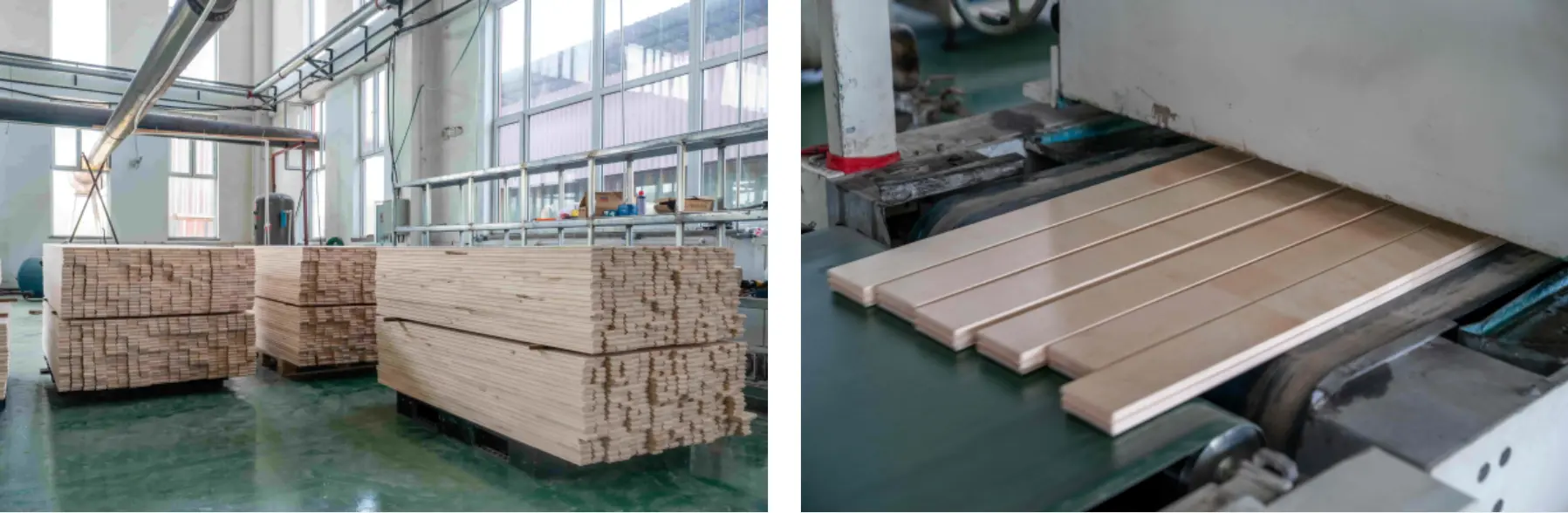
Cost Analysis and ROI of Using Natural Wooden Flooring in Eco-Homes
Initial Investment Breakdown
Solid oak Natural Wooden Flooring's material costs usually fall between modest and premium price ranges, based on the grade chosen, the size of the order, and the number of items ordered. Products in the select grade that have few natural character marks are more expensive than those in the common grade that accept oak's natural color and grain difference. Our direct-manufacturer pricing system gives you the best cost-performance value because it cuts out the markups that are common in standard distribution methods.
The cost of installation depends on the way chosen and the conditions of the spot. Professional installation usually makes up 30 to 50 percent of the total cost of the project. However, this number goes down for bigger projects where the costs of moving and setting up are spread out over more space. When compared to simple parallel installs, complex layouts that need complicated border designs or diagonal orientation require more work. When the amount of moisture in the concrete goes beyond what is reasonable or when structural fixes are needed, subfloor remediation costs more.
Extra costs come from supporting products like underlayment, moisture shields, adhesives, and screws. These parts make sure that the fitting works right, so they shouldn't be value-engineered below what the maker says. To fill in the expansion gaps around the edges of rooms, you need trim molding or transition strips that match or go well with the flooring. These add to the cost of both the materials and the work needed to finish the installation.
Quantifiable Long-Term Benefits
Because wood naturally insulates, it makes buildings more energy efficient. Wood's cellular structure makes air gaps that keep heat from moving more effectively than thick materials like stone or ceramic tile. Even though the R-value addition isn't as big as that of wall or ceiling insulation, the thermal comfort benefit lowers the transfer of cold to the floor during the winter, which could mean less heating energy used in homes.
In private markets, property value growth is known to be beneficial. According to research from the National Association of Realtors, homes with wooden floors sell more quickly and for more money than similar houses with carpet or laminate floors. This extra cost is because buyers want natural materials, think the floors are better, and know that wooden floors last a lot longer than other options.
Because solid wood flooring lasts longer, it saves money because it doesn't need to be replaced as often. Carpets may need to be replaced every 10 to 15 years and vinyl floors every 15 to 20 years. Hardwood floors, on the other hand, can last longer than 50 years with regular refinishing. This makes things last longer, which lowers their lifecycle costs, stops them from needing to be replaced over and over, and keeps a lot of stuff from going to landfills. This is good for the environment and can have measurable economic effects on trash management and business sustainability reports.
Alignment with Corporate Responsibility Objectives
Environmental, Social, and Governance (ESG) frameworks are becoming more and more important in both institutional and commercial buying choices. Natural wood flooring helps with many ESG goals because it is made from natural resources, stores carbon, and improves indoor air quality, all of which are good for people's health. Groups that keep track of Scope 3 pollution can show that certified wood goods have a lower carbon footprint than options made from petroleum.
LEED and other green building standards give points for using materials that come from sustainable sources, goods that produce few emissions, and materials that make indoor settings healthier. Our E1 formaldehyde emissions certification and the fact that FSC-certified goods are available help meet the paperwork needs of these rating systems. These kinds of certificates help the environment, but they also help with marketing, because certified buildings attract renters who are willing to pay more for healthier, more environmentally friendly places.
Solid wood flooring uses fewer resources over the lifetime of a building because it lasts longer and can be refinished. When materials need to be replaced often, they cause ongoing problems with energy use, transportation, and waste removal. On the other hand, a single wood floor installation that lasts 50–75 years with regular refinishing uses resources more efficiently. This is a measure that fits with companies' promises to sustainability and stakeholders' standards for choosing responsible materials.
Conclusion
Solid Natural Wooden Flooring has real benefits for the environment, the economy, and performance that are important to business and governmental leaders. When you combine renewable sources, high longevity, and the ability to be refinished, you get a great deal for projects that care about lifetime costs and sustainability. When procurement workers know how to choose the right species, how to install it, and how to keep it in good shape, they can come up with solutions that meet the performance standards of a particular project. As green building standards change and companies make bigger ESG promises, natural wood goods offer tried-and-true solutions backed by modern certifications for quality production and environmental protection.

FAQ
Can solid wood flooring be installed in moisture-prone areas?
The best conditions for wood floors are climate-controlled rooms with 30 to 55 percent relative humidity. Places with standing water, lots of spills, or unregulated humidity, like bathrooms, laundry rooms, or basements below grade that don't have the right moisture control, can be hard to work in. In places that aren't completely dry, engineered wood with a moisture-resistant core works better, but ceramic tile is still the best choice for really wet areas.
How does hardwood flooring affect indoor air quality?
Carpet fibers catch allergens, but solid wood surfaces don't. When finished with low-VOC coats, solid wood surfaces give off very few volatile organic compounds. Products with the E1 certification meet strict limits on formaldehyde emissions, which helps make living settings healthier. The natural hygroscopic features of wood allow for some moisture buffering, which can help keep room humidity levels stable. However, this effect is still small when compared to HVAC humidity control.
What sample options are available before large-scale orders?
Fushun Plum Flooring Co., Ltd. offers real samples that show the actual grain patterns, color ranges, and finish qualities of the production material. Analyzing samples is still important because real wood has natural variations that digital pictures can't fully show. We suggest looking at samples in the lighting that is already there in your installation place, since lighting has a big effect on how colors and grains look.
How does oak compare to other hardwood species for commercial applications?
Oak is a good choice for educational settings because it is hard, easy to work with, and inexpensive. With a Janka grade of about 1290 lbf, it can handle normal business traffic without getting dented and is cheaper than exotic species. The strong grain pattern helps hide small flaws, and the neutral color tones go with a lot of different design styles. Although maple is a little harder and better for heavy-duty uses, walnut is more expensive and has a unique darker look.
What warranty coverage applies to large commercial installations?
Warranty terms depend on the grade of the product, the type of finish, and how well it was installed. Most of the time, manufacturer promises only cover problems with the way the product was made and not wear and tear from use. However, end performance guarantees may say how long the product should last under certain traffic conditions. For the guarantee to still be valid, the work must be done correctly by trained professionals who follow the manufacturer's instructions. We suggest talking about specific warranty terms during the project definition phase to make sure that the covering matches the expected level of performance.
How do finish options affect maintenance requirements?
UV-cured urethane finishes that are strengthened with aluminum oxide protect hard surfaces and only need to be dusted and cleaned with the right products every so often. These finishes do a good job of keeping out stains and water. Oil finishes go deeper into the wood grain instead of just covering it with a film. This gives it a more natural look, but it needs to be reapplied more often—usually once a year in business settings—and it's easier to fix small problems without showing where the finish ends and the new one begins. When deciding which finish type to use, you should think about how you like the look, how skilled the care staff is, and how often you want to do maintenance.
Partner with Fushun Plum Flooring Co., Ltd. for Your Next Project
Our proven skills allow building workers who need a dependable Natural Wooden Flooring supplier to find complete solutions. We offer low prices straight from the factory and have strict quality control systems that are backed by ISO, IAF, CNAS, B1, and E1 certifications. Our large inventory stocks and various production lines make sure that we can consistently supply projects of any size. Additionally, the fact that we have installed over 1,000 sports venues shows that we are experts in difficult situations. You can email us at plumflooring123@163.com to get product samples, talk about technical details, or look into bulk price options that are cheap for your future projects.


References
1. Anderson, J. (2021). Sustainable Building Materials: Environmental Performance and Life Cycle Assessment. Green Construction Publishing.
2. Forest Products Laboratory. (2020). Wood Handbook: Wood as an Engineering Material. U.S. Department of Agriculture Forest Service.
3. National Wood Flooring Association. (2022). Technical Publication: Installation Guidelines and Performance Standards. NWFA Professional Standards.
4. Peterson, M. & Williams, R. (2019). Indoor Air Quality Benefits of Natural Building Materials. Journal of Environmental Health Research, 18(3), 245-267.
5. Richards, T. (2021). Comparative Life Cycle Analysis of Residential Flooring Products. Building and Environment Studies Quarterly, 44(2), 112-134.
6. Thompson, K. (2020). Wood Species Selection for Commercial Applications: Performance Characteristics and Specification Criteria. Architecture and Construction Materials Review, 15(4), 89-108.
Get Price, Catalog, and Professional Flooring Solutions